
4 Essential Steps for Planning Your DIY Music Tour
You have a batch of new songs and you're staring at a map, trying to figure out how to play them for people without losing your shirt. The excitement can turn to a cold sweat pretty fast. It’s tempting to just book a few gigs and hope for the best, but a good tour is more than a string of shows. It's a plan to grow your audience and actually make some money.
This isn't about booking every stage you can find. It's about smart planning, using your own data, and treating every stop as an investment. My argument is simple: a tour built on a solid budget and real fan data is the only kind that works.
Build a Realistic Tour Budget
The biggest mistake I see artists make is underestimating what a tour really costs. They focus on the gig fee and forget everything else, ending up in the red before the first chord is even struck. A successful tour starts with a ruthless look at the numbers.
Figure out what your tour will actually cost
Think about every single dollar leaving your pocket. This isn't just gas money. You need to account for fuel, tolls, accommodation (that friend's couch might cost a thank-you gift), food for every day you're on the road, and equipment maintenance like new strings or a pedal that inevitably breaks. And please, always have a contingency fund of at least 10-15% of your total budget for unexpected vehicle repairs or surprise fees.
For example, say you're a duo planning a quick 5-day run through three cities, covering about 800 miles. Fuel could be $160. Four nights in cheap motels might be $240. Food at $35 per person per day is $350. Add $100 for merch shipping, $75 for targeted social media ads, and a $100 contingency. Suddenly, you're looking at over $1,000 in expenses before you even think about paying yourselves.
Plan how you'll make money
Once you know your costs, you can figure out your break-even point. If your expenses for a single show are $200, then you need to make at least that much from your guarantee, ticket sales, and merch just to not lose money. You should be aiming to profit.
This is where your fan data is invaluable. Stop guessing where to play. Open up your Spotify for Artists dashboard and look at your top listener cities. Are they clustered together? That's your tour path. There's no point driving 500 miles to play for 10 monthly listeners when you have 500 fans just two hours away. The Spotify for Artists Tour Planning Guide has more on using your audience data.
And don't forget merchandise. It's often the biggest source of income on the road. Don't just bring a few t-shirts. Think about what your fans actually want. Maybe that's custom patches, stickers, or limited-run EPs. Plan your inventory, price it right, and make sure it's easy to see. If you want to learn more about making merch work for you, read our guide on strategic music merchandise for your tour.
Keep a simple spreadsheet. List every projected cost and every projected revenue source. Then, next to each, track your actual spending and income. This simple habit will show you exactly where your money is going and where you can improve next time.
Master Your Tour Logistics and Schedule
The road can be unpredictable, but a well-thought-out schedule is your best defense against chaos. It’s not about being rigid; it’s about having a solid framework so you can adapt when things go wrong.
Craft a realistic tour itinerary
You might be tempted to cram as many shows as possible into your route, but that's a fast track to burnout. Your itinerary needs to be realistic. A typical show day is long. You might wake up at 9 AM, drive for three hours, arrive at 1 PM, load in at 3 PM, soundcheck at 4, play at 9, and not get to bed until after midnight. That's without any delays. Trying to do that every day with long drives is a mistake. Buffer days aren't a luxury; they're essential for your energy, your voice, and your sanity.
Get your van and your gear ready
Before you load the first guitar, do a thorough check of your vehicle. Oil, tire pressure, and a spare tire are essential. The last thing you need is a breakdown in the middle of nowhere. For your gear, pack spares like extra guitar strings, drumsticks, cables, and batteries. These small things can save a show.
Have all your accommodations booked and confirmed in advance, even if it's just a friend's couch. Knowing where you'll sleep removes a huge stressor. And while you're planning, consider how you can reduce your tour's environmental impact. For a broader look at tour planning, our guide on planning a successful independent music tour has more ideas.
Secure Venues and Promote Your Tour
Getting a gig is one thing. Filling the room with people who actually want to hear you play is another. This step is about smart outreach and consistent promotion.
Target the right venues
Don't blast every club in town with a generic email. Do your research. Look for venues that fit your genre and audience size. If you're a folk singer, a metal club probably isn't your best bet. If you're new to a market, start small with coffee shops, listening rooms, or small bars to build a local following.
When you pitch, make it personal and concise. Show you've done your homework. A line like, "I've seen [local band] play at your venue, and your room's intimate setting would be perfect for our acoustic indie sound," shows you care. Include links to your music, press kit, and live videos. Make it easy for them to say yes.
Promote effectively on a small budget
Promotion isn't a single email. Start with your own audience. Your email list is your most powerful tool, so send dedicated emails to fans in each city you're visiting. On social media, create event pages for each show and post regularly in the days leading up. Offering an "early bird" ticket discount can create some urgency and give you a sense of who's coming.
Next, find partners in each town. Reach out to local bands you admire for support slots or co-bills. They'll bring their fans, and you'll bring yours, which makes for a better night for everyone. Don't forget local press. A quick, personal email to a small music blog, community paper, or local radio station can sometimes land you a mention. Even a small ad budget can work if you target it to the right people in each city.
Use a Professional EPK to Land Gigs and Press
Your Electronic Press Kit (EPK) is your professional calling card. It’s what venue bookers, promoters, and press look at to decide if you’re worth their time. A sloppy, incomplete EPK can kill an opportunity before you even get a listen.
What every booker and promoter needs to see
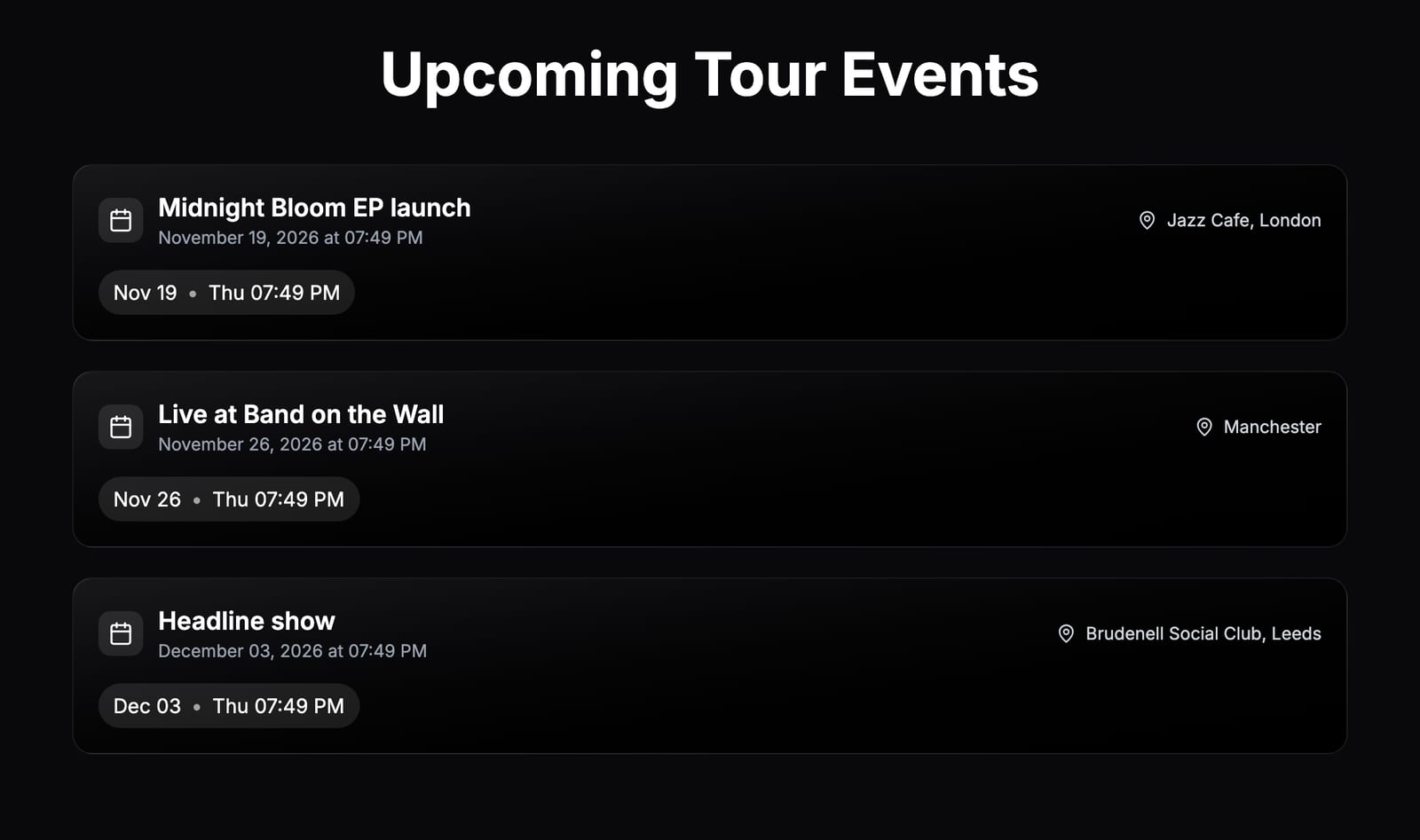
A solid EPK is easy to navigate and has everything a booker needs. That means a short, engaging bio, links to one or two of your best tracks, and high-resolution photos (live and promo shots). It should also have a quality live video that shows your stage presence, any good press quotes, your tech rider if you have one, and clear contact info. The biggest mistake is sending an EPK with outdated information or broken links. It just makes you look unprepared.
Tailor your EPK for each opportunity
You don't send the exact same EPK to everyone. While the core content stays the same, you should tailor the focus. For a venue, you might emphasize your live performance quality and how your sound fits their typical lineup. For press, you might highlight your unique story or recent releases. The ability to quickly update your EPK with tour-specific information, like available dates in a region or why you're a perfect fit for a festival, is incredibly valuable.
Tools like Tunepact's EPK Builder can help you build a professional electronic press kit to send to blogs, playlist curators, venues and press quickly, so you can focus on the music. You can easily update it for each specific outreach, ensuring you always put your best foot forward without spending hours on formatting.
What to Do After the Tour Is Over
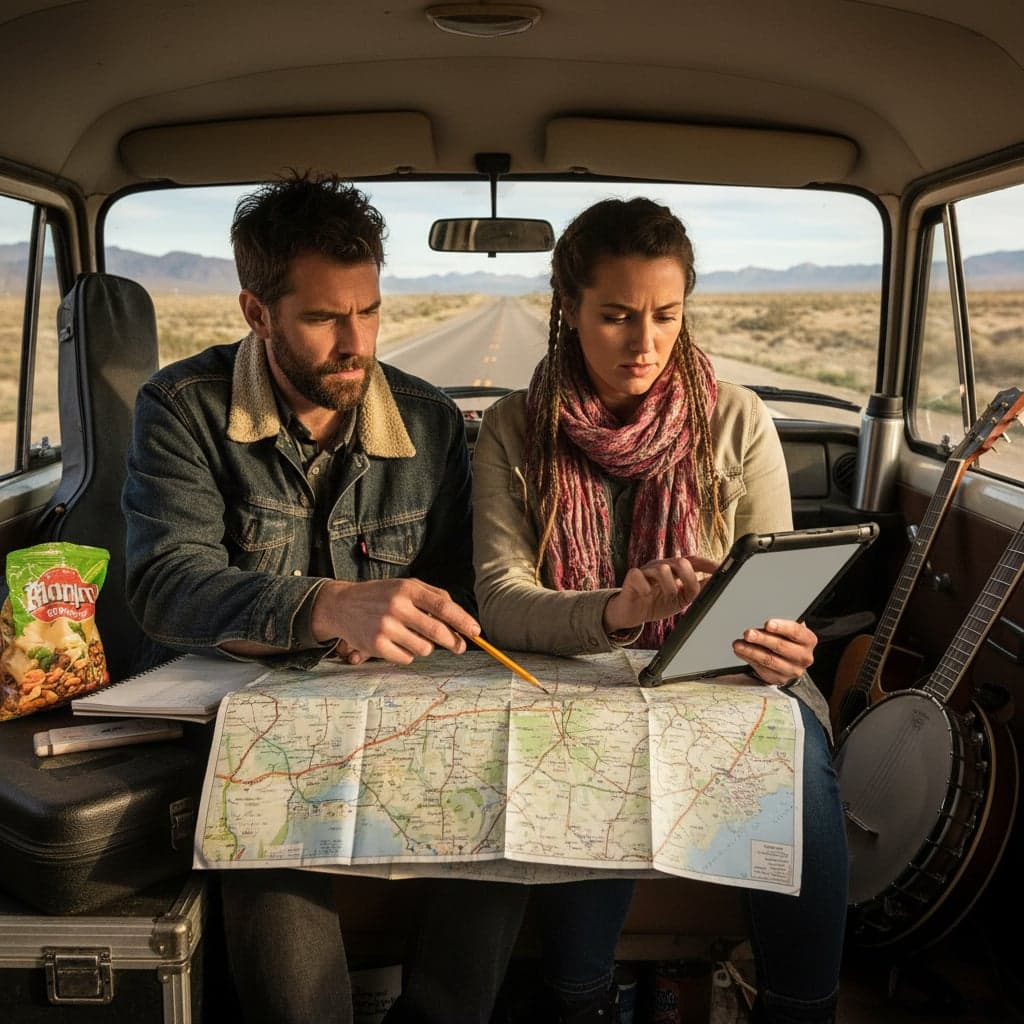
The tour doesn't end when you get home and unpack your gear. The real work of growth and relationship building often starts after the last note fades.
Take time to analyze your tour data. Go back to your budget spreadsheet and compare your projected versus actual numbers. Where did you make money? Where did you lose it? Look at ticket sales per city, what merchandise sold best, and how many new followers or email sign-ups you gained. This information is invaluable for planning your next tour.
Follow up with everyone. Send thank-you emails to venue bookers, promoters, and any local artists who supported you. Building these relationships is important for future bookings. A simple, personal thank you goes a long way.
Most importantly, engage with the new fans you just made. Send a "tour recap" email to your newsletter list with photos and stories. Shout out the cities you visited on social media. Your goal is to turn those casual show-goers into loyal supporters who will buy your next release and come to your next show. Reflect honestly on what went well and what could have been better. This feedback loop is how you build a real touring career.
Frequently Asked Questions
How much money do independent artists typically need to budget for a DIY tour?
The budget for a DIY tour varies wildly depending on duration, distance, and band size. For a solo artist or duo doing a short 3-5 day regional tour, a realistic budget could easily be $800-$2000, covering fuel, basic accommodation, food, and some promotional spend. For a full band with more members and longer distances, expect those costs to multiply significantly, potentially reaching several thousand dollars.
What's the best way to approach venues for booking if I'm an emerging artist?
Start by thoroughly researching venues that fit your genre and audience size, then send a concise, personalized email. Include a link to your professional EPK, highlight why your act would be a good fit for their specific venue, mention any local artists you could partner with, and suggest a few available dates. Keep it professional and to the point.
How far in advance should I start planning and booking my independent music tour?
For a DIY tour, it’s best to start planning and booking at least 3-6 months in advance. This gives you ample time to secure desirable venues, coordinate all your logistics like accommodation and travel, and run a good promotional campaign to build excitement before you hit the road.
What are the most effective low-cost strategies for promoting a DIY music tour?
Using your email list is the best place to start. Engaging with fans on social media with event pages and regular posts is also key. Collaborating with local artists for cross-promotion in each city is very effective, and reaching out to local music blogs or community radio can generate buzz without costing you much.