
Musician Website Guide: Build a Home for Your Music
A clear 2026 playbook for independent artists — what belongs on a musician website, when a smart bio link is enough, and how Tunepact's Tune.page fits beside a full site.
What does a musician website need in 2026?
A musician website needs music you can play immediately, a press-ready EPK or bio, a mailing list, current tour dates, and SEO that ranks your name — not a decorative homepage that never updates. If you are not ready for a full site, a music-native smart bio link (Tune.page) plus a hosted EPK covers the same jobs for most indie releases.
Musician website essentials
These six building blocks matter more than fancy animations or a 20-page mega menu.
Music embeds
Fans should hear you in one click — Spotify, Apple Music, YouTube, or Bandcamp embeds above the fold, not buried under a wall of text.
EPK / press kit
Bookers and curators expect bio, photos, music, and contact in one place. Link a hosted EPK or dedicate a /press page that stays updated.
Mailing list
Streaming algorithms change. An email list is the audience you own — capture it on every page with a clear reason to join (new drops, tour codes, exclusive demos).
Tour & dates
Upcoming shows, ticket links, and past highlights. Keep dates current; a stale calendar signals an abandoned site.
SEO basics
Your name + genre + city in titles and headings, unique copy (not pasted from Spotify), fast mobile load, and one clear canonical URL for your artist brand.
Smart bio link
Instagram, TikTok, and YouTube only give you one link. A music-native Tune.page complements (or temporarily replaces) a full website until you need custom pages.
Example
What a good artist page looks like
One artist page, top to bottom, with the parts fans and bookers look for first.
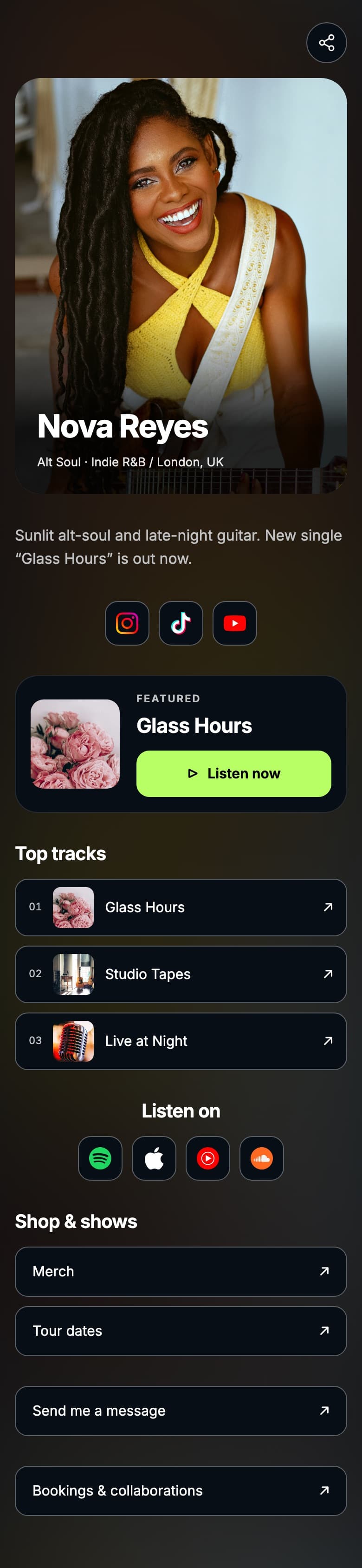
- Name, genre and citySEO basics
- A bio only you could writeStory
- SocialsFollow
- Latest singleAbove the fold
- Top tracksMusic embeds
- Listen onStreaming links
- Merch and tour datesTour & dates
- Message and bookingsContact
Built with Tune.page, which also has a fan club sign-up for your mailing list. Keep your EPK on its own link for press.
See how Tune.page worksTune.page vs a full musician website
Start with the job you need done — then upgrade when the site becomes a bottleneck.
A full musician website shines when you need custom branding, long-form storytelling, merch, blogging, or multi-section navigation. A Smart Bio Link (Tune.page) wins when your priority is one trustworthy link for Instagram, TikTok, and pitching — with song embeds, story, and analytics tied to Tunepact's release workflow. Many artists run both: Tune.page in every bio, website as the long-term brand home.
- Choose Tune.page when you need a free or fast music-native link this week
- Choose a full site when you outgrow a single page (store, blog, multi-project brands)
- Always keep an EPK URL ready — see Tunepact vs Bandzoogle if you are comparing builders
Deep dives from the Tunepact blog
Examples, inspiration, and independent-artist website tactics that expand this pillar.
- BlogIndependent artist websitesHow indie musicians structure a site that sells the music, not just the aesthetic.Read
- BlogBest musician website examplesReal examples of artist sites that convert listeners into fans and bookers.Read
- BlogInspiring musician websitesDesign and storytelling patterns worth stealing for your next rebuild.Read
Musician website SEO checklist
Rank for your name first — then genre and city queries that booking agents actually search.
Most artist sites fail SEO because they ship a template with stock copy and no unique page for the latest release. Start with a title like "Your Name — [genre] artist in [city]", write an About section only you could write, and give each release a URL or Tune.page section with lyrics angles and credits. Add schema (WebPage / MusicGroup when available), compress images, and make sure the mobile experience plays music without horizontal scroll. Internal-link your EPK, dates, and mailing list from the homepage so crawlers and fans find the same paths.
- Unique H1 with your artist name (not just “Home”)
- One primary CTA: listen, join list, or book
- Fast Core Web Vitals on mobile
- Fresh dates and latest single above the fold
EPK vs website
Fans browse the website; industry contacts open the EPK — build both for different jobs.
Your website can be atmospheric and brand-led. Your EPK should be ruthlessly clear: short bio, hi-res photos, playable music, press quotes, and a contact path. Putting both in one URL works if the press section is obvious; otherwise host a dedicated EPK (Tunepact's builder is built for this) and link it from the site footer and every pitch email. Never send a curator a Google Drive folder when a single EPK link would do.
Bio link vs website
A bio link is the door; a website is the house — most artists need the door first.
Social platforms force a single URL. Generic link-in-bio tools dump ten blue links and lose the song. A musician bio link should lead with the latest release, then EPK, tickets, and merch. Smart bio links for musicians (like Tune.page) add a featured song, streaming links and fan signup so the page feels like a mini-site. Keep your full website for depth; keep the bio link updated every release week so traffic from Reels and TikTok lands somewhere intentional.
Related guides
- Independent Artist WebsitesHow indie artists build a home online
- Best Musician Website ExamplesSites that convert fans and bookers
- Inspiring Musician WebsitesDesign and storytelling ideas
- Smart Bio Link (Tune.page)One music-native link for every bio
- Tunepact vs BandzoogleBio link + marketing hub vs website builder
Questions
Musician website FAQ
Quick answers for indie artists building a home online
Yes — if you want a durable home for your music, SEO, mailing list, and press. Social profiles and DSPs are rented land. A musician website (or a strong Tune.page plus EPK) is the asset you control.
Music embeds, an EPK or press section, a mailing list signup, tour/dates, contact, and SEO-friendly copy about who you are. Skip cluttered link dumps and outdated news widgets.
For many independent artists, yes at first. Tune.page covers bio-link needs: a featured song, streaming links, your bio and fan signup. Add a full site when you need custom branding, blog, merch store, or multi-page navigation.
Bandzoogle is a musician website builder. Tunepact is a song-first marketing hub with Tunepact Song DNA, planner, EPK, and Tune.page — so your link-in-bio and press kit connect to release strategy, not just page templates.
An EPK is a press package for industry contacts. A website is your public brand home for fans. Many artists host the EPK as a page or link on the site — or use Tunepact's hosted EPK alongside Tune.page.
Compare website & link tools
Give your music a home this week
Launch a Tune.page smart bio link free, or pair it with a Tunepact EPK so every pitch and every social profile points to something professional.