Instagram Algorithm Facts Every Musician Needs to Know Now
You pour everything into a new reel, the track sounds amazing, the video is just right, and you hit post. Then… nothing. A few likes trickle in from friends, but you’re left wondering if Instagram is hiding your work from everyone else. It feels like you’re trying to crack some secret code just to get heard. The truth is, there is no code to crack. The way to reach more people isn’t about gaming a system—it’s about understanding what the platform actually values, so you can build real connections with people who will love your music.
How Instagram Decides Who Sees Your Posts
Let's be direct: Instagram’s main goal is to keep people on the app longer. It does this by showing people content it thinks they will genuinely like and interact with. It's not trying to bury your music; it's trying to be a good DJ for its users. Your feed isn't a simple timeline anymore. It's a personalized playlist.
The system looks at four main things. First, information about your post: is it a video, what’s it about, are people already interacting with it? Second, information about you: how often do you post, do people usually engage with your work? Third, the user's own activity: what do they usually like, comment on, or share? And finally, your history with that specific user: have they liked your posts before?
All this data feeds a system that creates a unique feed for every user. This means what your fan in London sees might be totally different from what your fan in Tokyo sees. The big mistake is thinking of the algorithm as a monster you need to trick. It’s not. It’s a system that’s constantly learning who wants to see your music.
Turn Comments into Real Conversations
Every single comment on your posts, even just an emoji, is a signal to Instagram. It says, "Someone cared enough about this to stop and type something." That’s a big deal. The more people comment, the more likely Instagram is to show your post to others.
But it goes deeper than just getting comments.
Your response to those comments is what matters most.
When a fan takes the time to say, "Love this new track, the guitar solo is insane!", and you reply with, "Thanks so much, glad you caught that! What's your favorite guitar part to play?", you've done two things. You’ve deepened that fan's connection to you. And you’ve signaled to the algorithm that this is a real conversation. That fan is now much more likely to see your next post because the algorithm has learned they have a strong interest in you. For more ideas on starting these interactions, check out these
.
Focus on What Really Signals Interest
Chasing likes is often a waste of energy. They don't signal real interest. Instead, focus on actions that tell Instagram your content has value.
Prioritize Shares and Saves, Not Just Likes
A like is a quick tap. A share or a save is different. That means someone found your content so useful or moving that they want to keep it or show it to someone else. Instagram interprets
shares and saves as much stronger indicators of quality
than likes. So, how do you get them? Create content that’s worth sharing. A relatable struggle about songwriting, a moment from your studio, or a short clip of your music that makes someone think, "My friend needs to hear this!"
Embrace a Raw, Unpolished Look
It’s easy to feel pressure to have perfectly polished visuals all the time. But often, the opposite works better. Authentic, less-polished content can build a much deeper connection with your audience. Think behind-the-scenes glimpses, a quick practice session on your phone, or you talking directly to the camera about your process. This rawness feels real and
builds a sense of intimacy
that highly produced content can miss. One Hypebot guide on the Instagram algorithm notes that this 'raw' aesthetic is increasingly effective for musicians. You can read more about it here:
.
Write Your Captions for Discovery
Hashtags still have a place, but Instagram's search is getting smarter. It now looks beyond hashtags and reads your captions. Start thinking about using
keywords strategically within your captions
themselves. If your music is "indie folk with a melancholic twist," don't just use #indiefolk. Weave those words into your caption naturally. For example, "Working on a new track that really leans into that melancholic indie folk vibe I've been exploring." Do the same with alt-text on your images. This helps Instagram understand your content and show it to people searching for those themes, even if they don't follow you yet. This can also help you find new audiences who might be interested in
.
Make Your Bio Link Work for Your Music
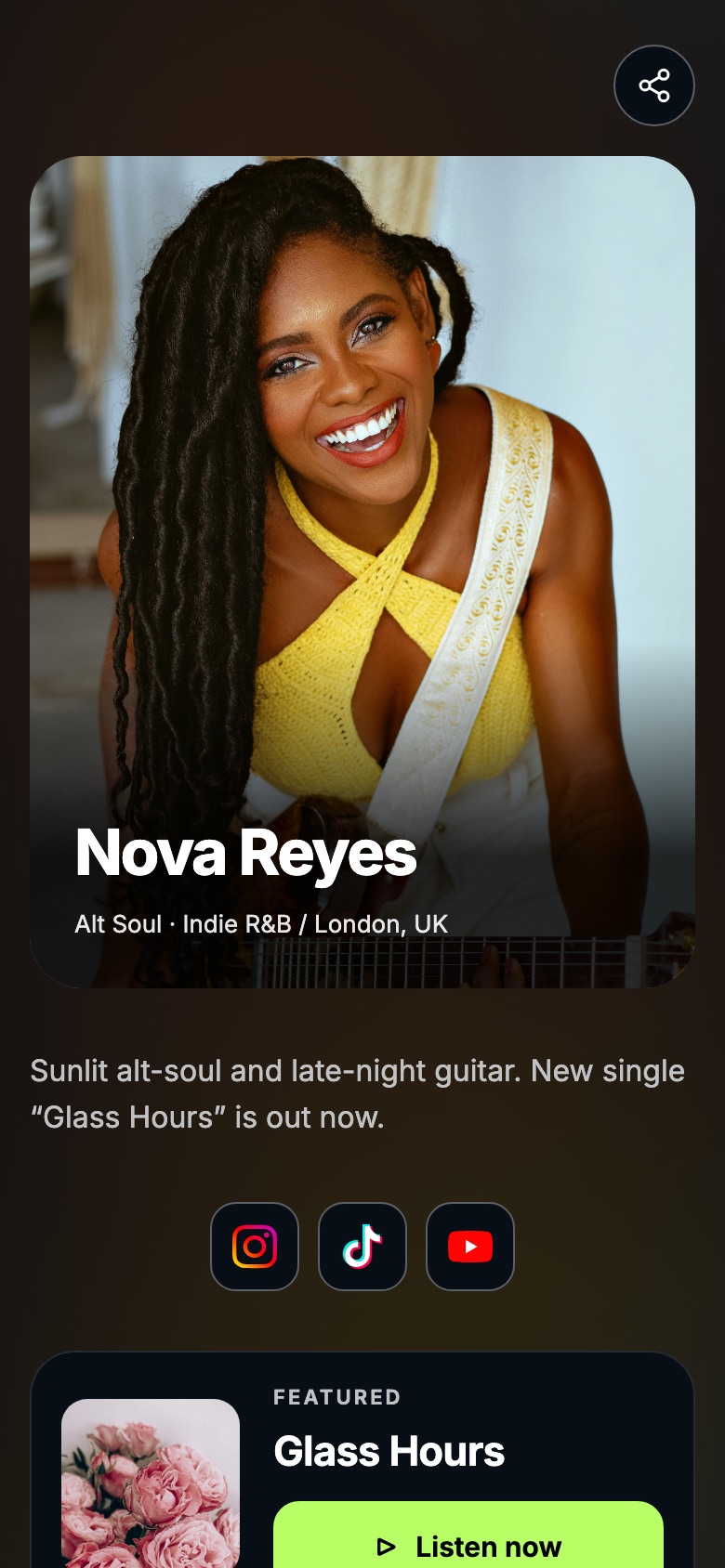
Once you've grabbed someone's attention on Instagram, the next step is to make it dead simple for them to find your music, your shows, and your merch. This is where
your bio link becomes your most valuable piece of digital real estate.
A generic link-in-bio tool might work, but it doesn't understand what a musician needs.
A tool like the Tunepact Smart Bio Link is different. It's a music-first link-in-bio page for your releases, socials and shows. Imagine your latest single, all your streaming links, your upcoming tour dates, and your merch store, all organized on one clean page. It removes the friction. Instead of making fans hunt for your music, you're giving them a clear map.
You can set up your
to feature your new single at the top, followed by links to buy tickets for your next gig, and then direct access to your Spotify, Apple Music, and Bandcamp pages. A specialized tool is better than a generic one because it's built for artists. It's designed to help you with challenges like how to
across every platform.
Post Things That Start a Conversation

The key is to create content that naturally invites comments, saves, and shares, rather than things that are just passively consumed.
Think in open-ended questions. Instead of "Listen to my new song," try "I'm working on lyrics about overcoming creative blocks—what's one piece of advice you'd give someone feeling stuck?" This invites real answers. Use Instagram Stories for polls and Q&As for direct, easy interaction. Behind-the-scenes peeks into your songwriting process or your practice space can build a strong connection.
Your captions are an invitation to talk. Don't just describe the photo. Ask a question. Share a thought. If you post a short clip of a new riff, your caption could be, "Been messing with this riff all week—can't decide if it needs to be heavier or more melodic. What's your gut feeling?" This gives people something to respond to.
The biggest mistake is posting without a prompt for interaction.
You’re leaving engagement on the table.
Try this: post a video of you playing two different endings for a song and ask, "Alright, I'm stuck. Version A (more upbeat) or Version B (more melancholic)? Let me know which one hits you harder in the comments!" This gives your audience a direct way to engage and feel like part of your creative process.
Frequently Asked Questions About Instagram for Musicians
Does buying followers help or hurt my Instagram algorithm performance?
Buying followers almost always hurts your Instagram algorithm performance in the long run. These accounts are usually bots or inactive users, meaning they won't engage with your content. This signals to Instagram that your content isn't valuable, ultimately reducing your organic reach. Focus on attracting real fans who genuinely care about your music.
How often should musicians post on Instagram to please the algorithm?
The algorithm values consistency and quality over sheer quantity. It's better to post 3-4 high-quality, engaging pieces of content per week consistently than to post daily for a week and then disappear for a month. Find a schedule you can realistically maintain without burning out, ensuring each post offers value to your audience.
What's more important for indie musicians: likes or comments/shares?
For indie musicians, comments and shares (and saves) are far more important signals to the algorithm than likes. Likes are a low-effort interaction, whereas a comment or a share indicates a much deeper level of engagement and interest, telling Instagram your content is highly valuable and worth showing to more people.
Can using specific hashtags boost my music's visibility?
Yes, using specific, relevant, and niche hashtags can definitely boost your music's visibility by making your content discoverable to people who are actively searching for those topics or genres. However, rely on meaningful engagement and quality content first; hashtags are a tool to amplify, not replace, those fundamentals.
