Where Independent Artists Discover New Listeners Beyond Mainstream Radio
Tired of chasing mainstream radio? This guide reveals how independent artists can leverage internet radio for musicians and niche online communities to discover dedicated listeners and build a passionate fanbase.
Hadi H. Heidari
10 min read
Table of Contents
Where Independent Artists Discover New Listeners Beyond Mainstream Radio
You've just finished tracking your best work yet, a collection of songs that truly captures your unique sound. You're ready to share it, but the thought of battling for attention on mainstream platforms or chasing local radio play feels like shouting into a void. It's frustrating when you know your music is good, but it's not quite fitting into the usual boxes. The truth is, your perfect listeners are out there, and they're often found in places far removed from the mainstream. **Hyper-niche internet radio stations and genre-specific online communities are often your most effective, yet frequently overlooked, channels for building a loyal, engaged fanbase.**
Pinpointing Your Perfect Internet Radio Homes
Finding the right internet radio station for your music isn't about casting a wide net. It's about precision. You're looking for the digital equivalent of a tiny, packed club where everyone knows the deep cuts in your genre.
Researching Niche Stations and Online Communities
Start by thinking about your sound. Is it experimental folk? Psychedelic garage rock? Ambient electronic? Whatever it is, there's a corner of the internet dedicated to it. Use search engines with terms like "internet radio [your genre]," "indie [your genre] radio," or "online music communities [your genre]." Explore online radio directories that allow filtering by genre, country, or even mood. You'll uncover stations you never knew existed.
Spend time in genre-specific forums, Reddit communities, and even Discord servers. These are places where dedicated fans and artists discuss new music and often share links to their favorite independent stations. A quick search for "music discovery platforms" might point you to some helpful aggregators, but look more closely at the communities themselves. This approach helps you identify platforms that genuinely champion independent artists in your specific lane, rather than just playing whatever's popular. This focus on the specific over the general is essential, because as
Once you find a potential station, don't just send your track blindly. Listen to it for a few days. Does your music truly fit their vibe? Does the station have an active social media presence? Are their posts engaging, and do they highlight the artists they play? Look for signs of an engaged community—comments on their social posts, active chat rooms, or listener call-ins. A station that's truly passionate about its niche will have listeners who are just as passionate, and those are the people you want to reach. You're looking for quality over quantity, a station that treats the artists they play with respect and genuinely promotes their discoveries.
Crafting an Irresistible Pitch for Radio Play
You’ve found your perfect station. Now, you need to make them want to play your music. This isn't about begging; it's about presenting your art professionally and making it easy for them to say "yes."
What Radio Curators Really Look For
A concise, professional email is your best friend. The subject line is critical: "Submission: [Your Artist Name] - [Track Title] (Genre: [Your Genre])" is clear and to the point. In the body, introduce yourself briefly, explain why you think your music is a good fit for their station (mention specific shows or artists they play), and provide a single, easy-to-access link to your music. Make sure this link points to high-quality audio files. Don't attach files directly to the email; curators often won't open them due to security concerns and mailbox limits. Include a short, compelling bio (2-3 sentences) and a link to your EPK.
Here’s an example opening line that works: "Hi [DJ Name or Station Name] Team, I'm [Your Artist Name], an independent artist making [your genre] music. I've been a longtime listener of your show/station, especially enjoying your features on [mention a similar artist they've played], and I believe my latest single, '[Track Title],' would be a great fit for your audience." This shows you've done your homework and respect their taste. Remember, these folks are often doing this for the love of music, just like you. For more insights on reaching out effectively, check out these
The biggest mistake artists make is sending generic, impersonal emails. Curators can spot a copy-paste job from a mile away. Don't send unsolicited attachments. Ever. And please, proofread your email. Typos make you look unprofessional. Avoid sending long, rambling stories about your life or trying to convince them your music is "the next big thing." Let the music speak for itself, supported by a professional presentation. Also, don't follow up excessively. A polite follow-up email after a week or two is fine, but anything more can be annoying. Patience is key. If you're looking for a broader approach to getting your music out there, understanding your
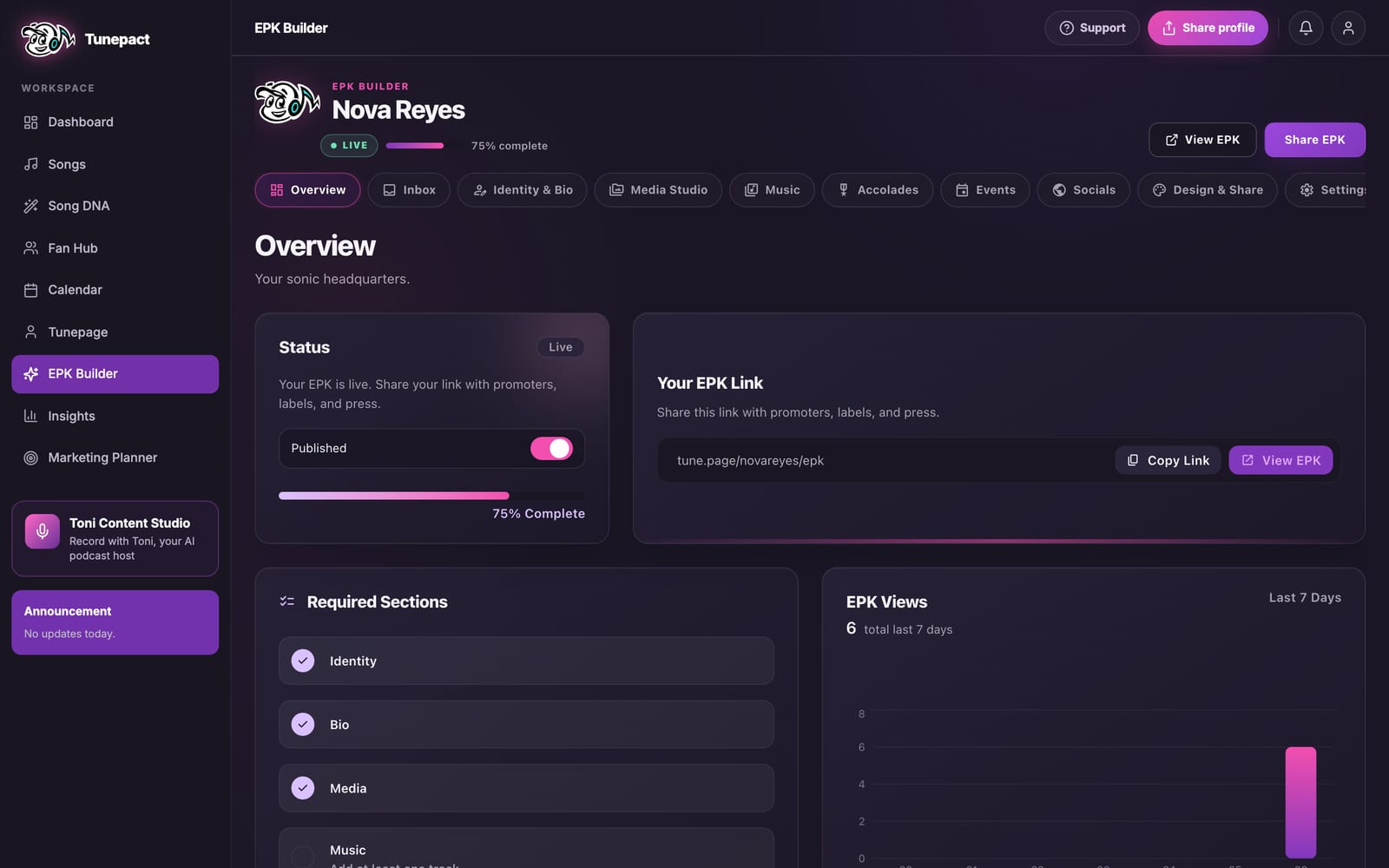
The EPK Builder: publish your press kit and share one link
When a curator is interested, they’ll want to know more about you. A well-constructed Electronic Press Kit (EPK) is essential. It's your professional resume for the music world.
Essential Elements of a Radio-Ready EPK
Your EPK should be a one-stop shop for everything a curator needs. It needs your bio, high-resolution photos, links to your music (preferably streaming and download options), press clippings or notable achievements, and links to your social media. It should be easy to navigate and visually appealing. You want to make it as effortless as possible for them to learn about you and use your assets if they decide to feature you.
Tunepact's
helps artists compile all necessary assets (bio, music, photos, press clippings, social links) into one shareable, professional link. It means you don't have to scramble to find everything every time you need to send it out. Just share one link, and they have it all.
Tailoring Your Kit for Specific Stations
While your core EPK will remain consistent, you can subtly tailor it. For example, if you have a press quote that specifically mentions your appeal to a niche audience, make sure that's prominent for a niche station. Use the customizable sections of your EPK Builder to highlight aspects of your story or sound that align perfectly with the station's focus. Imagine a curator is looking for artists in your sub-genre. If your EPK immediately presents a clear narrative about your sound and influences, along with high-quality assets, it makes their job easier and increases your chances of getting played. This streamlined process leaves a strong, lasting impression. A solid EPK is one of the foundational
Getting played on internet radio is a win, but it's just the beginning. The real work is in turning those spins into genuine connections and building a lasting fanbase.
Building Genuine Relationships with Curators
If a station plays your music, thank them! A simple, personalized email or a shout-out on social media mentioning their station and show goes a long way. Tag them in your posts when you share the news. This shows appreciation and helps build a relationship. These curators are often tastemakers in their communities, and building a good relationship can lead to future plays, interviews, or even collaborations. Think of it as networking, but with real warmth and gratitude.
Using Online Communities for Fan Growth
Beyond the radio station itself, actively participate in the genre-specific online forums and social groups you identified earlier. Don't just promote your music; engage with the community. Comment on other artists' tracks, share interesting articles, and participate in discussions. When you become a valued member of the community, people will naturally be more inclined to check out your music. For instance, if you're in a progressive metal forum, share your thoughts on a new release from a band you admire. Then, when appropriate, you can mention your own project. This authentic engagement is key to building a loyal fanbase. Spotify for Artists has some great tips on
, which applies to any platform. Remember, you're not just looking for listeners; you're looking for superfans who will stick with you for the long haul. You can find more specific guidance on
You're getting plays and building connections. Now, how do you know it's working, and how do you build on that success?
Tracking Your Internet Radio Success
Keep a simple spreadsheet. Log every station that plays your music, the date, and any feedback or interactions you had. Monitor your streaming platform analytics for spikes in listeners around the time of radio play. Some internet radio stations might even provide listener data or geographic breakdowns. Pay attention to comments on your social media or direct messages. Are new people discovering you? Where are they coming from? This data helps you understand which stations are most effective for your specific sound and audience. Don't just track numbers; track engagement.
From Niche Plays to Broader Recognition
The success you build on niche internet radio stations can be a powerful stepping stone. If a station has played your music regularly, you can use that as a strong point when pitching to other, slightly larger stations, blogs, or playlist curators. Mention specific stations and shows that have supported you. This demonstrates that your music has a proven audience and is being embraced by tastemakers. Consistent niche exposure builds a credible narrative around your artistry. It's a long game, but it's how independent artists grow organically. While the industry continues to evolve, understanding trends can help. The
Frequently Asked Questions About Internet Radio for Musicians
How do I find internet radio stations that play my genre?
Start by using search engines with specific genre terms like "internet radio [your genre]" or "indie [your genre] radio." Explore online radio directories that allow filtering by genre. Also, engage in genre-specific online forums and communities, as members often share their favorite stations.
What should I include in my pitch to an internet radio station?
Your pitch needs a clear subject line, a brief and personalized introduction explaining why your music fits their station, and a single link to high-quality audio. Include a concise bio and a link to your professional EPK. Avoid attaching files directly to your email.
Do internet radio plays count towards royalties or charting?
Yes, internet radio plays can count towards performance royalties, especially if the station is properly licensed and reports its plays to performing rights organizations (PROs) like ASCAP or BMI. However, these plays typically do not count towards mainstream charting, which usually requires much larger commercial radio spins or sales/streams on major platforms.
Is paying for internet radio promotion worth it for indie artists?
It depends heavily on the service. While some legitimate services exist, many are pay-for-play schemes that offer little genuine engagement. Focus on organic outreach and building real relationships with curators. Prioritize services that offer transparent reporting and genuine connections over guaranteed spins, as building authentic interest is more valuable than artificially inflated numbers.