Music Content Calendar for Musicians: A 14-Day Release Plan
A useful music content calendar turns one song into several distinct reasons to listen. Start with the track’s sound, story, production, and audience; assign each post one job; and arrange the posts around pre-release, release day, and follow-up. You do not need to publish every day. You need a plan you can finish and a clear destination for interested listeners.
This 14-day framework is for an independent artist preparing a single without a full marketing team. Adapt the number of posts to your available time, assets, and audience.
What should a musician’s content calendar include?
Your calendar can be a spreadsheet, project board, or planning tool. Give every scheduled item these fields:
Date and campaign phase: pre-release, release day, or post-release;
Content job: introduce, deepen interest, invite action, or respond;
Angle: sound, story, process, performance, or listener context;
Format and platform: Reel, TikTok, Short, Story, carousel, email, or another format you actually use;
Opening hook: the first visual, line, question, or musical moment;
Asset: the exact clip, image, or draft required;
Call to action: one next step;
Destination: release page, full video, streaming link, email form, or show page;
Status: idea, filming, editing, approved, scheduled, or published; and
Result to review: attention, response, or next-action signal.
This tells you what must be made and why it belongs in the campaign.
Step 1: Build the calendar from the song
Before choosing platforms, write a short source brief:
primary genre and a more specific sonic lane;
mood, energy, and emotional movement;
central theme or tension;
one memorable lyric, sound, or performance detail;
likely listener or listening situation; and
the release action you want someone to take.
For example, a fictional artist might write:
“After the Static” is a mid-tempo alternative-pop song about deciding not to reopen a relationship that has already ended. Close vocals and restrained drums create tension before the final chorus moves into resolve. The campaign will lead listeners from lyric and performance clips to one release page.
If naming those details is difficult, begin with Tunepact Song DNA. Upload an MP3 for a private, pre-release-safe analysis of the song’s identity, mood, audience perspective, positioning, and content opportunities. Its Content Ideas section can produce directions for TikTok, Reels, and YouTube Shorts. Review and edit every result before using it.
Step 2: Choose one campaign goal and listener action
A calendar should support a release goal, not merely keep an account busy.
Your primary goal might be to:
introduce the song to people who fit its sound or theme;
bring existing supporters to a release-day video;
collect email sign-ups for the next release;
support a show connected to the song; or
give collaborators and fans material they can share accurately.
Then select one primary listener action for each campaign phase. Before release, that might be visiting a release page or following for the launch. On release day, it might be listening or watching the full video. After release, it could be watching a performance, joining your list, or exploring another song.
Do not ask for a pre-save, comment, share, follow, stream, and merchandise purchase in the same post. One useful next step is easier to understand.
Step 3: Use five repeatable content lanes
Content lanes prevent the calendar from becoming fourteen versions of “new music soon.”
1. Sound
Lead with a musical moment: an opening texture, vocal turn, beat change, harmony, solo, or transition.
Example hook: “The whole track changes when the live drums enter.”
2. Story
Explain the decision, image, or experience behind one part of the song. Give enough context to make the music mean more.
Example hook: “I wrote this when I realized closure was not another conversation.”
3. Process
Show how the recording, arrangement, artwork, or performance came together. Focus on one detail the listener can notice when they hear the song.
4. Performance
Use a live take, rehearsal, stripped version, studio performance, or one-take vocal.
5. Invitation and response
Tell people the release is available, answer a useful comment, acknowledge a collaborator, or point to the next campaign step.
The lanes can repeat. The angle should change.
Step 4: Create one reusable release asset pack
Do not build each post from nothing. Prepare a compact source pack before the calendar begins:
one clean performance or visual anchor;
three to five vertical clips with different openings;
artwork and a few correctly cropped stills;
a short song description and verified credits;
lyric text you control or have permission to use;
a release link that can change from pre-release to “listen now”;
collaborator handles and approved tags; and
captions, alt text, and spoken-word subtitles where needed.
One vertical performance can become a sound-first clip, lyric explanation, production detail, and direct release post. Reuse the asset, but change the reason to watch.
Step 5: Map a flexible 14-day release calendar
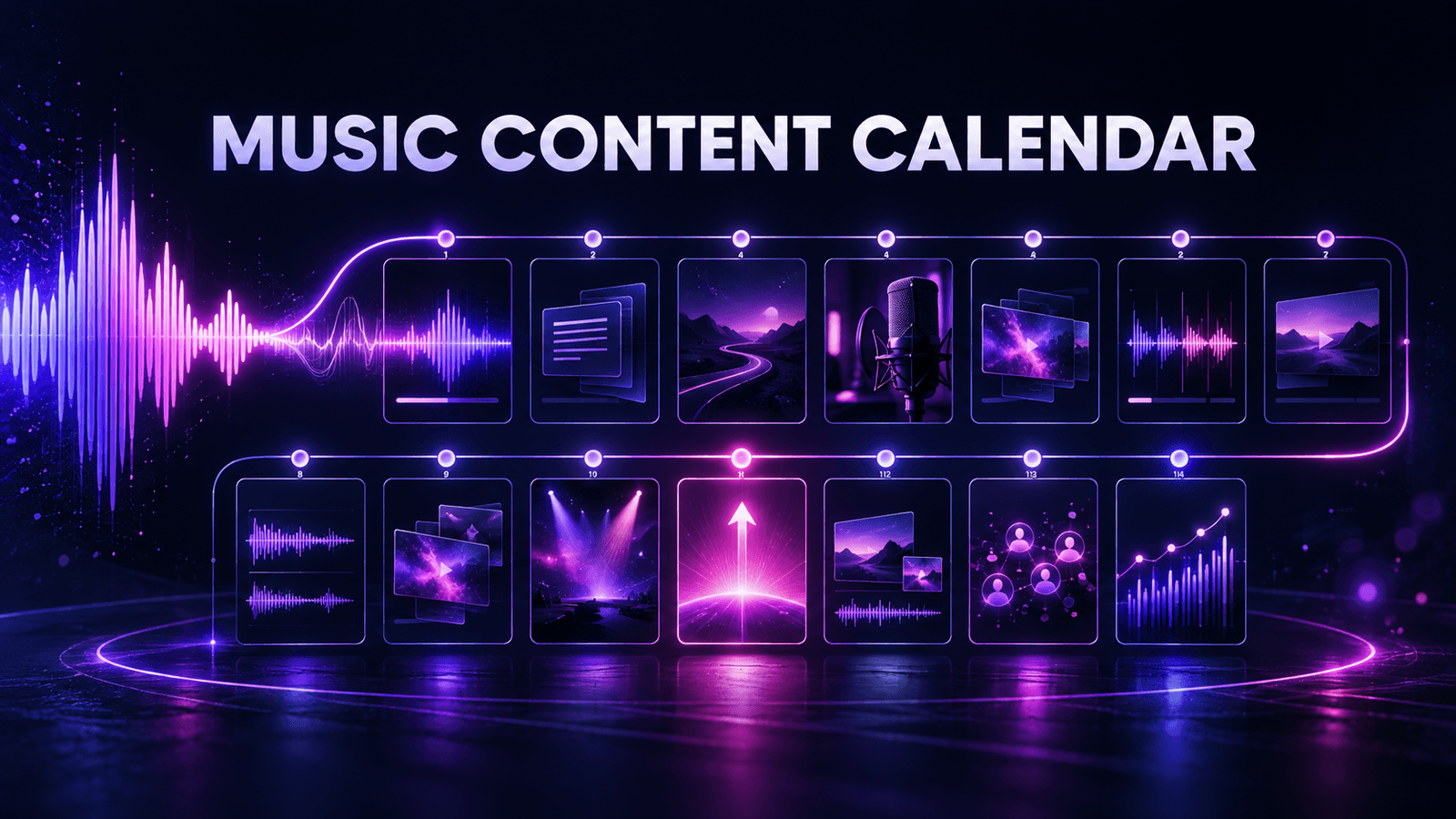
This example uses ten publishing moments across fourteen days. It is not a required posting quota.
Day 1: Introduce the song’s identity
Share the clearest musical moment with one line describing the feeling or sonic lane.
Day 3: Tell the story behind one line
Explain the real tension or image behind a lyric, then let the relevant section play.
Day 5: Reveal a production or performance detail
Show a stem, harmony, instrument, arrangement choice, or rehearsal moment.
Day 7: Invite a relevant response
Ask a question connected to the song’s theme or listening context. Avoid engagement bait that has no relationship to the release.
Day 9: Publish a performance-led post
Use a live, acoustic, or alternate take with one release-related call to action.
Day 11: Make the release information unmistakable
State the song title, artist name, date, and destination. Test the link on a phone.
Day 13: Share the strongest final pre-release angle
Choose the sound, story, or performance asset that communicates the song most clearly.
Day 14: Publish the release-day invitation
Lead with the strongest available creative, say the song is out, and send people to one working destination.
Two useful follow-ups
After release day, publish a comment response, collaborator perspective, alternate performance, lyric explanation, or behind-the-scenes detail.
For a shorter song-aware sequence, use Tunepact’s Free Music Marketing Plan. It offers three- or seven-day promotional plans, platform-specific tasks, editable caption and hashtag suggestions, and song-aware content angles. Keep the final voice your own.
Step 6: Adapt the idea instead of copying the post
The same campaign angle can travel across platforms, but the edit should respect how people encounter it.
Instagram: Give the visual world and caption enough context to support profile visits, Stories, and conversation.
TikTok: Make the setup understandable immediately and let the musical or emotional turn arrive quickly.
YouTube Shorts: Make the clip useful on its own and, where your channel is eligible, connect it to the related full video. YouTube documents how a Short can link viewers to another Video, Short, or Live from the same channel. See YouTube’s related-video instructions.
Email or fan message: Use a more direct note for people who already chose a closer connection with you.
Choose the platforms where you can create credible work and respond to real people.
Step 7: Add rights and approval checks to the calendar
Before scheduling, confirm that you can use the recording, sample, artwork, footage, location, lyrics, and collaborator material. Add an approval field when someone else must review a post.
If a creator, brand, payment, gift, or other material relationship is involved, disclose it clearly. The US Federal Trade Commission’s social-media disclosure guidance is a useful reference for US-facing campaigns. Platform music and advertising rules can differ, so check the current requirements inside the account before promoting or boosting a post.
Step 8: Review the path, not only the post
Match measurement to the job:
Exposure: views, plays, or accounts reached;
Attention: watch time, completion, or retention where available;
Response: saves, shares, comments, replies, or profile activity; and
Next action: release-page visits, listening-link clicks, full-video views, follows, sign-ups, or inquiries you can verify.
When your setup supports campaign tracking, use consistent UTM parameters for channel links. Google Analytics documents utm_source, utm_medium, and utm_campaign for identifying referral campaigns and notes that values are case-sensitive. Read Google’s campaign URL guidance and keep a simple naming record.
Compare content lanes rather than declaring that an entire platform “worked.” Story, performance, and direct release posts may serve different jobs.
Music content calendar checklist
Before the first post, confirm that:
the song brief, title, date, credits, and links are accurate;
the campaign has one primary goal;
every post has one job, hook, asset, CTA, and destination;
the calendar includes sound, story, process, performance, and response angles;
the schedule is realistic enough to finish;
important text fits mobile safe areas and spoken content has captions;
rights, collaborator approvals, and disclosures are recorded;
the release-day destination works on a phone;
follow-up posts are prepared; and
you will review attention, response, and next-action signals together.
A calendar should not force a song into generic content. It should help the track reveal more of itself over time. Analyze your next release with Tunepact Song DNA, turn the strongest artist-reviewed signals into a workable calendar, and make your music move.