Music is Your Art. Your Website is Your Business: A Musician's Strategy.
As an independent musician, your passion is creating art that moves people. But to thrive in today's digital landscape, your passion also needs a strategy. Your music career isn't just about the notes you play; it's also a business, and your website is its beating heart. It's time to shift your perspective and transform your online presence from a static digital billboard into a dynamic engine for growth, fan engagement, and revenue.
The Foundation: Why Your Musician Website is a Business Blueprint
Many artists view their website as a necessary evil – a place to dump their bio, a few photos, and some music links. However, for the savvy independent artist, a website is much more than that. It's your most powerful tool for building a sustainable career, acting as a central hub for all your marketing and monetization efforts.
Beyond the Bio: Shifting Your Mindset from Art to Strategy
Your music is undoubtedly your art, born from inspiration and dedication. But your website, while reflecting that art, must function as a strategic business tool. Think of it less as a personal scrapbook and more as your digital storefront, concert venue, and fan club all rolled into one. This mindset shift is crucial for independent artists looking to make a significant impact.
Traditional artist websites often prioritize flashy visuals or extensive biographies without a clear objective. In contrast, an effective business website is goal-oriented and conversion-driven. It's meticulously designed to guide visitors toward specific actions, whether that's streaming a song, joining your mailing list, or buying merchandise. This strategic approach ensures every visitor interaction serves a purpose.
Independent artists need this kind of strategic online hub for several compelling reasons. It serves as your brand's anchor, a place you fully control, unlike social media platforms. It's essential for fan conversion, turning casual listeners into dedicated supporters, driving revenue directly to you, and building a strong, recognizable brand that resonates with your audience. To gain an edge in the competitive music industry, it helps to compare platforms like Tunepact and Bandzoogle to understand the tools available for building such a robust online presence.
Emphasizing the importance of planning your website goals before diving into design cannot be overstated. What do you want visitors to do when they land on your page? Do you want them to listen to your latest track, sign up for your newsletter, or purchase a ticket? Clearly defined goals will dictate your website’s structure, content, and calls to action.
Defining Success: What Should Your Artist Website Achieve?
Before you even think about colors or fonts, pinpoint what "success" means for your artist website. Is it expanding your email list, increasing music sales, booking more gigs, or growing your social media following? Your website should be designed to facilitate these outcomes directly.
A successful musician website acts as a central command center for your career. It should effectively showcase your music, engage your audience, and provide clear pathways for them to support you. By aligning your website with your broader career objectives, you transform it into a powerful asset rather than just another online presence.
Crafting an Effective Artist Website: Design Tips for Conversion
Once you understand the strategic importance of your website, the next step is to design it for maximum impact. An effective artist website isn't just aesthetically pleasing; it's a finely tuned machine built for user experience and conversion.
Prioritizing User Experience: Making Navigation Intuitive
Your website's navigation should be as clear and intuitive as possible. Visitors should be able to find what they're looking for within a few clicks, whether it's your music, tour dates, or contact information. A confusing layout can quickly lead to a high bounce rate, meaning potential fans leave before they even engage.
Focus on a clean, uncluttered design that guides visitors towards key actions. Use clear menu labels like "Music," "Tour," "Store," "Bio," and "Contact." Ensure these elements are easily accessible from any page. The smoother the user journey, the more likely visitors are to stay and engage with your content.
Remember that a great user experience extends beyond just navigation. It encompasses the overall feeling of your site, from load times to readability. Every element should contribute to a positive interaction with your brand.
Essential Design Elements for a Professional Online Presence
To truly stand out, your website needs to exude professionalism. This means investing in high-quality visuals, including stunning photography and engaging video content. Your imagery should reflect your brand's aesthetic and personality, making an immediate impact on visitors.
Consistent branding is also paramount. Your website should visually align with your album art, social media profiles, and overall artistic identity. This consistency builds recognition and trust with your audience. Furthermore, ensure your website is fully mobile responsive; a significant portion of your audience will likely access your site from smartphones and tablets.
Strategic placement of clear calls to action (CTAs) is vital for conversion. These are direct instructions telling visitors what you want them to do next, such as "Listen Now," "Join My Mailing List," "Buy Tickets," or "Shop Merch." Make these buttons prominent and compelling.
An designing an effective independent artist website requires careful consideration of these elements. Another critical business asset for any serious musician is an Electronic Press Kit (EPK). Your EPK should be easily accessible on your website, providing journalists, promoters, and industry professionals with all the necessary information about your project in one concise package. This includes high-resolution photos, your bio, music samples, press clippings, and contact details.
Leveraging modern templates and professional photos can significantly enhance your credibility and appeal. Many website builders offer artist-specific templates that are designed with musicians in mind, providing a strong foundation. For a comprehensive guide, check out the Complete Checklist for Building a Band Website, which covers many essential elements for a business-oriented musician site.
Mastering Fan Engagement for Musicians: Building Your Community & List
Your website isn't just for showcasing your music; it's a vital tool for cultivating a loyal fan base. Engaging your audience means creating opportunities for them to connect with you on a deeper level, transforming casual listeners into dedicated supporters.
The Power of the Email List: Your Direct Line to Fans
In the ever-changing landscape of social media algorithms, an email list is paramount for independent artist marketing strategies. Unlike social media platforms where your reach is controlled by external algorithms, your email list is a direct, unfiltered line to your most engaged fans. You own this relationship, ensuring your messages always land in their inbox.
This direct access allows for personalized communication, sharing exclusive content, and driving traffic to new releases or merchandise. It surpasses the often-limited organic reach of social media, making it an invaluable asset for long-term career sustainability.
There are several effective strategies for capturing fan emails on your website. Consider offering a "lead magnet" – something of value in exchange for an email address. This could be a free download of an unreleased track, an exclusive acoustic performance video, or a behind-the-scenes photo pack. Exit-intent pop-ups, which appear when a visitor is about to leave your site, can also be highly effective for last-minute email captures.
Exclusive content offers, available only to subscribers, create a sense of urgency and value, encouraging sign-ups. Think about early access to music, pre-sale tickets, or subscriber-only Q&A sessions. For maximizing these efforts, consider using dedicated landing pages to capture fan leads, ensuring a focused and conversion-optimized experience.
Interactive Elements to Deepen Fan Connections
Beyond email capture, your website can host various interactive elements to foster deeper connections. Engaging blog content allows you to share your stories, inspirations, and journey, giving fans a peek behind the curtain. Think about posts detailing your songwriting process, gear reviews, or tour diaries.
Offering behind-the-scenes access through photos, videos, or even live streams embedded on your site makes fans feel more invested in your career. You could host a Q&A section, a fan forum, or even create polls to gather their opinions on new music or merchandise designs. These interactive features transform your website from a passive consumption platform into a vibrant community hub.
The goal is to make your website a destination where fans feel connected, valued, and excited to participate. This level of engagement builds loyalty that transcends fleeting social media trends.
Monetization Strategies: Driving Revenue from Your Music Career Website
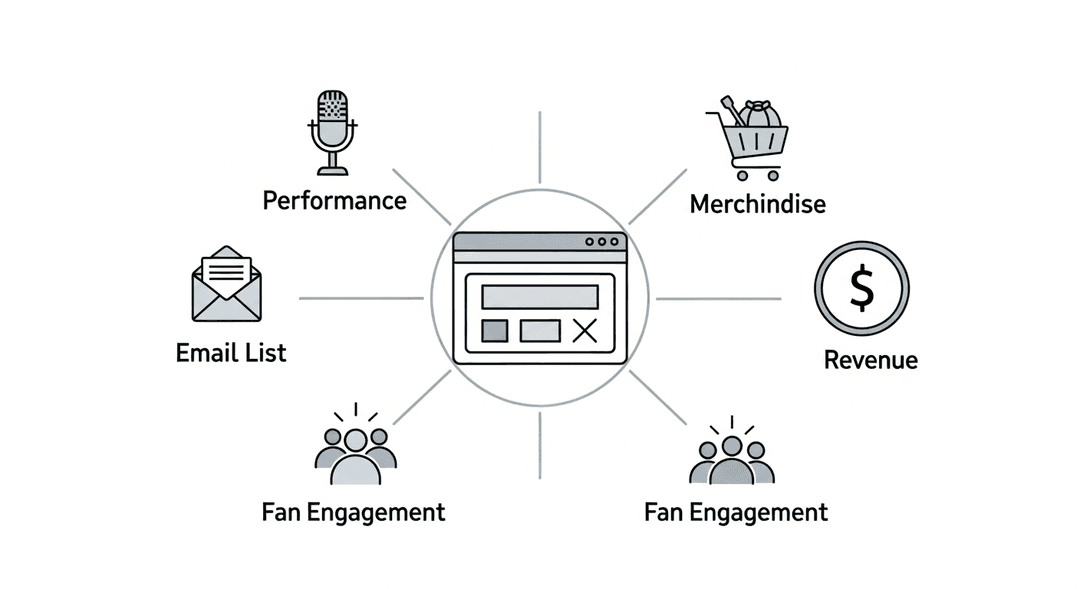
Your website should not only engage fans but also serve as a powerful engine for generating income. By strategically integrating various monetization avenues, you can take control of your financial future as an independent artist.
Direct-to-Fan Sales: Taking Control of Your Income
One of the most empowering aspects of having your own website is the ability to engage in direct-to-fan sales. This model cuts out intermediaries, allowing you to keep a significantly larger share of your earnings. You can sell digital downloads of your music directly, offering various formats and even exclusive bundles.
Selling physical releases – CDs, vinyl, cassettes – directly from your website creates a tangible connection with your fans and often commands higher price points. Be sure to provide clear product descriptions, high-quality images, and secure payment options. For more detailed insights, explore proven strategies to sell more music online as an independent artist.
Beyond music, integrating merchandise sales directly into your website is a fantastic revenue stream. T-shirts, hoodies, posters, stickers, and custom accessories all serve as mobile billboards for your brand and provide fans with a way to show their support. Make your merch store easy to navigate and ensure high-quality product images.
Exploring Diverse Revenue Streams for Independent Artists
Your website can support a multitude of income-generating activities. Strategies for selling tickets to virtual and live shows can be seamlessly integrated. Use direct links to ticketing platforms or embed ticket widgets directly on your tour page, making it effortless for fans to purchase their spot.
Consider exploring subscription models, such as integrating platforms like Patreon directly into your site. This allows your most dedicated fans to support you monthly in exchange for exclusive content, early access, or unique experiences. Crowdfunding integration for new projects – albums, music videos, tours – can also leverage your website as the central hub for campaigns, sharing updates and encouraging contributions.
Don't overlook licensing opportunities. If your music is suitable for film, TV, commercials, or games, your website can host a dedicated page for licensing inquiries, showcasing your catalog and providing contact information for potential sync deals. Finally, think about bundling products and services. Offer a digital album with a signed CD, a merch package with a personalized video message, or a VIP concert experience with exclusive access. These bundles can increase perceived value and average order size, driving more revenue for your music career website.
Optimizing Your Website for Discovery & Growth: Musician Website SEO Best Practices
A beautiful, functional website is only effective if people can find it. This is where Search Engine Optimization (SEO) comes into play. By optimizing your site, you increase its visibility on search engines, driving more organic traffic and potential new fans to your digital doorstep.
Boosting Visibility: SEO Essentials for Artists
An introduction to optimizing your band website for SEO involves making your site discoverable by search engines like Google. This starts with conducting thorough keyword research for artists. Think about what terms potential fans might type into a search engine to find music like yours. This could include your band name, genre, location, or even specific lyrical themes.
Once you have your keywords, integrate them naturally into your website's content. Focus on on-page SEO fundamentals, which include crafting compelling meta descriptions for each page (the short description that appears under your page title in search results) and using descriptive alt text for all images (which helps search engines understand what your images are about). A clear and logical heading structure (using H1, H2, H3 tags) also helps search engines understand your content's hierarchy and relevance.
The importance of mobile optimization and site speed for search rankings cannot be overstated. Google prioritizes websites that load quickly and are fully responsive on mobile devices. A slow or non-mobile-friendly site will suffer in search rankings and provide a poor user experience. For a deep dive into this topic, refer to TunePact's comprehensive guide on optimizing your band website for SEO.
Tracking Your Success: Analytics for Informed Decisions
Building a great website is just the beginning. To truly optimize it for growth, you need to understand how visitors are interacting with your site. This is where analytics come in. Learning the basics of using analytics (e.g., Google Analytics) to track traffic, bounce rates, and conversion goals provides invaluable insights.
Analytics can show you where your visitors are coming from, which pages they spend the most time on, and where they might be dropping off. You can track how many people sign up for your email list, purchase music, or click on your tour dates. This data is crucial for making informed decisions about your website's content and design.
The value of continuous refinement and A/B testing for website effectiveness is immense. Don't set and forget your website. Regularly review your analytics, identify areas for improvement, and experiment with different headlines, calls to action, or page layouts. A/B testing allows you to compare two versions of a page to see which performs better, ensuring your website is always evolving to meet your goals and serve your audience more effectively.
Frequently Asked Questions
What are the essential elements for an effective musician's website?
An effective musician's website must include a clear, intuitive navigation system, high-quality music (streamable and downloadable), engaging visuals (professional photos/videos), an up-to-date tour schedule, an integrated store for merch and music, and a prominent email list signup form. Additionally, an easily accessible Electronic Press Kit (EPK) and clear calls to action are crucial for guiding visitors and demonstrating professionalism. Mobile responsiveness is also non-negotiable in today's digital age.
How can an independent artist's website generate revenue?
An independent artist's website can generate revenue through several direct-to-fan strategies. This includes selling digital music downloads, physical albums (CDs, vinyl), and merchandise (t-shirts, posters) directly from the site. It can also integrate ticket sales for virtual and live concerts, offer exclusive content via subscription models (like Patreon integration), host crowdfunding campaigns for new projects, and showcase licensing opportunities for film/TV. Bundling various products and services can further enhance revenue generation.
Why is an email list more important than social media followers for musicians?
An email list provides a direct, owned communication channel with your fans, unlike social media platforms where your reach is subject to ever-changing algorithms. When you send an email, it's highly likely to land in your subscriber's inbox, ensuring your message is seen. Social media, conversely, often limits your organic reach, meaning only a small percentage of your followers may see your posts. Your email list is a loyal, engaged audience you can nurture and monetize directly, making it a more reliable and powerful tool for long-term career growth.
What's the best strategy for promoting my music through my website?
The best strategy for promoting your music through your website involves a multi-faceted approach. First, ensure your music is prominently featured and easily accessible, with clear "Listen Now" or "Download" calls to action. Leverage your email list to announce new releases, offering exclusive previews or behind-the-scenes content to subscribers. Use your website's blog to share stories behind your songs or creative process, driving deeper engagement. Finally, optimize your site for SEO with relevant keywords to ensure new listeners can discover your music through search engines, and integrate your social media channels to amplify reach while always funneling traffic back to your website as your central hub.