Self-Publishing Your Music: A Guide for Independent Songwriters
As an independent artist, your music is your livelihood, your passion, and your intellectual property. While many focus on recording and distributing their tracks, understanding and actively managing your music publishing is one of the most critical steps you can take to maximize your income and retain full creative control. This comprehensive guide from TunePact will walk you through everything you need to know about how to self-publish music, transforming you from a songwriter into a savvy music entrepreneur.
Why Independent Artists Should Self-Publish Their Music
The landscape of the music industry has dramatically shifted, empowering independent artists like never before. Among the most significant opportunities is the ability to self-publish music, a strategy that puts more money in your pocket and keeps your creative vision intact. It's not just about releasing songs; it's about owning your entire musical enterprise.
Reclaiming Your Publisher's Share for Maximum Royalties
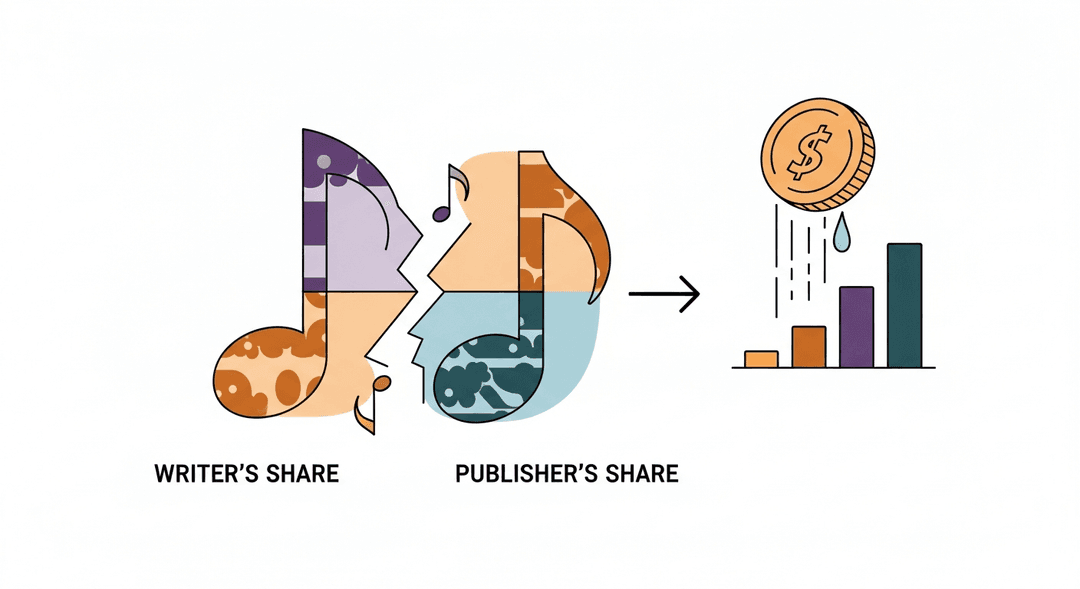
For every song you write, there are two main copyright components: the musical composition (the melody, lyrics, and harmony) and the sound recording (the actual performance captured). Music publishing specifically deals with the composition. When your song is used publicly, it generates various types of royalties. Traditionally, these compositional royalties are split into two halves: the writer's share and the publisher's share.
If you only register as a songwriter and don't have a publisher, you're leaving 50% of your compositional royalties on the table. By choosing to self-publish music, you effectively become your own publisher, allowing you to collect both the writer's and the publisher's share. This means you can access the full 100% of your compositional royalties, significantly increasing your potential earnings. For a deeper dive into how royalties work, check out our easy guide to music royalties.
Creative Control and Long-Term Vision
Beyond the financial incentives, self-publishing grants you unparalleled creative control. You decide how your music is used, where it's licensed, and what your long-term career path looks like. There’s no external party dictating terms or making decisions about your catalog without your direct input.
While the administrative effort involved in DIY music publishing can seem daunting at first, the trade-off for increased revenue, artistic freedom, and direct ownership of your intellectual property is invaluable. It’s an investment in your career that pays dividends both creatively and financially.
Demystifying Music Publishing for Independent Artists
To successfully navigate the world of music publishing for independent artists, it's crucial to understand the fundamental concepts and key players involved. This knowledge forms the bedrock of effective royalty collection and rights management.
Composition vs. Sound Recording: What's the Difference?
This distinction is paramount. The musical composition is the underlying song itself – the lyrics, melody, and musical arrangement. The copyright for the composition belongs to the songwriter(s) and publisher(s). Royalties generated from the composition include performance, mechanical, and synchronization royalties.
The sound recording, or master recording, is the specific performance of that composition captured on tape or digitally. The copyright for the sound recording belongs to the recording artist(s) and/or record label. Royalties from sound recordings include master use licenses, digital performance royalties (e.g., from non-interactive streaming like Pandora), and sales royalties. When you self-publish music, your focus is primarily on maximizing the income from your compositions.
Understanding these differences is key to protecting your work. Learn more about safeguarding your creations in our guide on how independent artists can copyright their music.
The Role of Performance Rights Organizations (PROs) and Collection Societies
Performance Rights Organizations (PROs) are essential entities for songwriters and publishers. In the US, the major PROs are ASCAP, BMI, and SESAC. Their primary function is to collect performance royalties generated when your music is publicly performed. This includes plays on radio, TV, in live venues, restaurants, and through streaming services (both interactive and non-interactive).
PROs track these performances and distribute the collected royalties to both the songwriters and their publishers. Affiliating with a PRO is one of the first steps you'll take when you decide to self-publish music.
Beyond PROs, there are other collection societies that handle different types of royalties:
- Mechanical Rights Organizations (MROs): These societies (like The MLC in the US) collect mechanical royalties when your composition is reproduced. This happens every time your song is streamed interactively, downloaded, or physically reproduced (CDs, vinyl).
- Synchronization (Sync) Licensing Agencies: While not always "societies," these entities facilitate the licensing of your music for use in visual media like films, TV shows, commercials, and video games.
- International Collection Societies: For global reach, your PRO and MRO will work with their international counterparts to collect royalties generated outside your home territory.
Your DIY Guide: How to Register as a Music Publisher
The good news is that you don't need a massive record deal to become your own music publisher. The process of learning how to register as music publisher is entirely within reach for any dedicated independent artist. Here's a practical breakdown:
Setting Up Your Publishing Entity (Even as a Solo Artist)
Even if you're a solo artist, you'll need to establish yourself as a publishing entity. This doesn't always require forming a complex corporation, especially at the outset. You have a few options:
- Individual Publisher: In some cases, especially when starting, you can operate as an individual under your own name. However, this offers less legal protection.
- DBA (Doing Business As): Also known as a "fictitious business name," a DBA allows you to operate under a specific publishing name without creating a separate legal entity. This is often an affordable and straightforward option.
- LLC (Limited Liability Company): An LLC provides legal protection for your personal assets and can lend more credibility. While it involves more paperwork and cost, it's a popular choice for artists who want to professionalize their publishing arm.
Choose a unique name for your publishing entity. This name will be registered with your PRO and other collection societies.
Affiliating with a PRO as a Publisher: Step-by-Step
This is a critical step in learning how to register as music publisher. If you're already registered as a songwriter with a PRO, you'll need to create a separate publisher account with the same PRO. Here’s a general overview:
- Choose Your PRO: If you're already a writer member of ASCAP, BMI, or SESAC, you'll need to register your publishing entity with that same PRO. You cannot be affiliated with multiple PROs as a writer or publisher simultaneously. Our complete guide to music PRO registration offers more details.
- Apply for a Publisher Account: Visit your chosen PRO's website and look for the publisher affiliation section. You'll typically need to provide your publishing entity's name, contact information, tax ID (EIN for LLCs, SSN for individuals/DBAs), and potentially a small application fee.
- Receive Your Publisher Number/ID: Once approved, your PRO will assign a unique publisher ID.
- Register Your Songs: After your publisher account is active, you must register each of your compositions with your PRO. When doing so, you will list yourself as both the writer (with your writer ID) and your publishing entity as the publisher (with your publisher ID). This ensures you claim both shares of performance royalties.
Understanding Mechanical and Synchronization Rights Collection
Beyond performance royalties, mechanical and synchronization royalties are crucial for maximizing your income as a self-published artist.
- Mechanical Royalties: In the US, The MLC (Mechanical Licensing Collective) is now the primary entity for collecting and distributing mechanical royalties from interactive streaming services. You'll need to register your songs directly with The MLC or use a publishing administrator to do so on your behalf. For older formats or specific licenses, entities like the Harry Fox Agency (HFA) also play a role. Each time your song is streamed on Spotify, Apple Music, or similar platforms, a mechanical royalty is generated.
- Synchronization (Sync) Royalties: These are generated when your music is licensed for use in visual media. Collecting sync royalties typically involves direct licensing agreements. You might work with a sync agent, a music library, or directly with music supervisors to place your music. There is no central collection society for sync royalties; they are negotiated on a per-use basis.
Essential Tools & Services for Self-Publishers and Maximizing Royalties
While DIY music publishing puts you in control, you don't have to go it entirely alone. Several tools and services exist to simplify the administrative burden and help you collect every penny you've earned.
Publishing Administrators: Your Back-Office Solution
Publishing administration services are a game-changer for independent artists. Companies like Songtrust, Sentric Music, and TuneCore Publishing act as your global back office, registering your songs with hundreds of collection societies worldwide. They track, collect, and pay out your mechanical, performance, and sometimes even sync royalties, taking a percentage of what they collect.
Here's how they help you maximize music royalties:
- Global Reach: They affiliate with collection societies in numerous territories, ensuring your royalties are collected wherever your music is played.
- Simplified Registration: You register your songs once with the administrator, and they handle the complex task of registering with all relevant societies.
- Royalty Tracking: They have the systems in place to track usage and ensure accurate royalty statements.
- Audit & Dispute Resolution: In some cases, they can identify and dispute incorrect royalty payments.
When choosing a publishing administrator, consider their fee structure, the territories they cover, the transparency of their reporting, and their customer support. For a detailed comparison, check out this excellent resource on Comparing Music Publishing Administration Services.
Leveraging Digital Platforms and TunePact for Success
In the digital age, technology is your ally. Accurate metadata is paramount for ensuring your royalties are properly tracked and attributed. When uploading your music to distributors, always provide complete and correct information, including songwriter splits, ISRC codes (for recordings), and ISWC codes (for compositions) once available.
Platforms like Spotify for Artists also offer valuable insights. Their Songwriting and Publishing Resources provide official guidance on Songwriter Pages and Written By playlists, helping to maximize exposure and earnings for your compositions. Utilizing these tools ensures your music reaches the right ears and generates the royalties it deserves.
At TunePact, our marketing platform can further complement your self-publishing efforts by expanding your reach and audience. Our tools help you connect with fans, promote your releases, and build a sustainable career, ensuring that your diligently self-published music finds its way to a global audience. Discover how our music marketing platform can help you amplify your music today.
Streamlining Your Self-Publishing Workflow: Best Practices
Effective organization and strategic planning are vital for any independent artist looking to thrive in DIY music publishing. By implementing best practices, you can minimize administrative headaches and maximize your earning potential.
Strategic Song Registration and Metadata Accuracy
The golden rule of royalty collection is timely and accurate registration. As soon as a song is completed and you plan to release it, register it with your PRO (both writer and publisher shares) and your chosen mechanical rights administrator (like The MLC or your publishing admin).
- ISWC Codes: Ensure each composition receives an International Standard Musical Work Code (ISWC). Your PRO or publishing administrator will usually assign these. This unique identifier is crucial for global tracking.
- Metadata Management: When submitting your music to distributors, make sure all metadata is impeccable. This includes songwriter names, splits, publisher name, and any co-writer information. Incorrect metadata is a leading cause of lost or delayed royalties. Maintain a master spreadsheet of all your songs, their ISWC codes, ISRC codes, and registration dates.
- Co-writer Agreements: If you collaborate, always have clear, written agreements with co-writers detailing ownership splits and administrative responsibilities. This prevents future disputes and ensures smooth royalty distribution.
Exploring Sync Licensing Opportunities for Your Catalog
Synchronization licensing can be a lucrative revenue stream for self-published artists. It involves licensing your music for use in films, TV shows, commercials, video games, and other visual media. To prepare your music for sync:
- Clean Mixes: Ensure you have high-quality, professionally mixed and mastered tracks.
- Instrumental Versions: Always create instrumental versions of your songs. Music supervisors frequently need these for scenes where vocals might interfere.
- Metadata Tagging: Tag your tracks with relevant keywords describing mood, genre, instrumentation, and potential uses.
- One-Stop Clearance: Ideally, you should own 100% of both the master and publishing rights, making your song "one-stop" friendly. This means a music supervisor only needs to clear the rights with one party (you), simplifying the process.
You can actively seek sync opportunities by submitting to music libraries, pitching directly to music supervisors, or working with sync agents. Be prepared to negotiate licenses, which can range from small fees for indie projects to substantial sums for major commercials or films. This is an excellent way to diversify your income and get your music heard by new audiences.
Common Challenges and How to Overcome Them in DIY Music Publishing
While the benefits of self-publish music are immense, it's important to be realistic about the challenges. Being your own publisher means taking on responsibilities traditionally handled by a dedicated team. However, with the right strategies, these challenges are entirely manageable.
Managing the Time Commitment and Administrative Burden
One of the biggest hurdles for independent artists is the time required for administration. Tracking registrations, monitoring royalties, and understanding statements can be time-consuming. It’s a trade-off for retaining 100% of your publishing income and control.
- Schedule Dedicated Admin Time: Treat your publishing administration like any other important task. Block out specific hours each week to review statements, register new works, and follow up on inquiries.
- Leverage Technology: Utilize spreadsheets, cloud storage, and digital tools to keep your catalog organized. Publishing administrators, as discussed, are invaluable for offloading much of this work.
- Outsource Strategically: If your budget allows, consider hiring a virtual assistant for data entry or a music business consultant for periodic advice.
Remember, this administrative work is an investment in your long-term financial stability as an artist.
Navigating International Royalties and Global Collection
Collecting royalties globally is notoriously complex due to varying laws, different collection societies in each territory, and currency exchange rates. This is where publishing administrators truly shine.
- Publishing Administrators are Key: As mentioned, services like Songtrust or Sentric simplify international collection by affiliating with societies worldwide. They handle the intricate process of registering your music and chasing royalties across borders.
- Understand Tax Implications: Be aware of international tax treaties and withholding taxes on foreign royalties. Your publishing administrator or a tax professional can provide guidance on how to minimize these impacts.
- Stay Informed: The music industry is constantly evolving. Keep abreast of changes in copyright law, new digital platforms, and emerging royalty streams. Industry newsletters, webinars, and TunePact's blog are excellent resources for staying current.
Frequently Asked Questions about Self-Publishing Music
Here are answers to some common questions artists have when considering DIY music publishing:
What is the difference between a writer's share and a publisher's share of music royalties?
The writer's share is the portion of compositional royalties directly allocated to the songwriter(s) for creating the song. The publisher's share is the portion allocated to the publisher for administering the song and exploiting its commercial potential. Each typically accounts for 50% of the total compositional royalty. By self-publishing, an artist can claim both shares, receiving 100% of the compositional royalties.
Do I need a separate business entity or company to self-publish my music?
While you can sometimes register as an individual publisher, it's generally recommended to establish a separate entity like a DBA (Doing Business As) or an LLC (Limited Liability Company). This provides a professional identity for your publishing arm, helps separate your business finances from personal ones, and in the case of an LLC, offers legal liability protection. Your chosen PRO will require you to register a publishing entity name.
How do publishing administration services help independent artists collect their royalties?
Publishing administration services act as an outsourced back office for self-published artists. They register your songs with hundreds of global collection societies, track public performances and reproductions, collect mechanical and performance royalties worldwide, and then pay them out to you, typically taking a percentage fee. This significantly reduces the administrative burden and ensures you collect royalties from territories you might otherwise miss.
Can I self-publish my music if I am already registered as a songwriter with a PRO?
Yes, absolutely! If you're already registered as a songwriter with a PRO (e.g., ASCAP, BMI), you'll simply need to affiliate your publishing entity with the same PRO. You will create a separate publisher account under your chosen publishing name. Once your publisher account is active, you'll register your songs under both your writer and publisher affiliations to ensure you collect both shares of the compositional royalties.