What Is an EPK for Musicians? A Pre-Release Checklist That Makes Pitching Easier
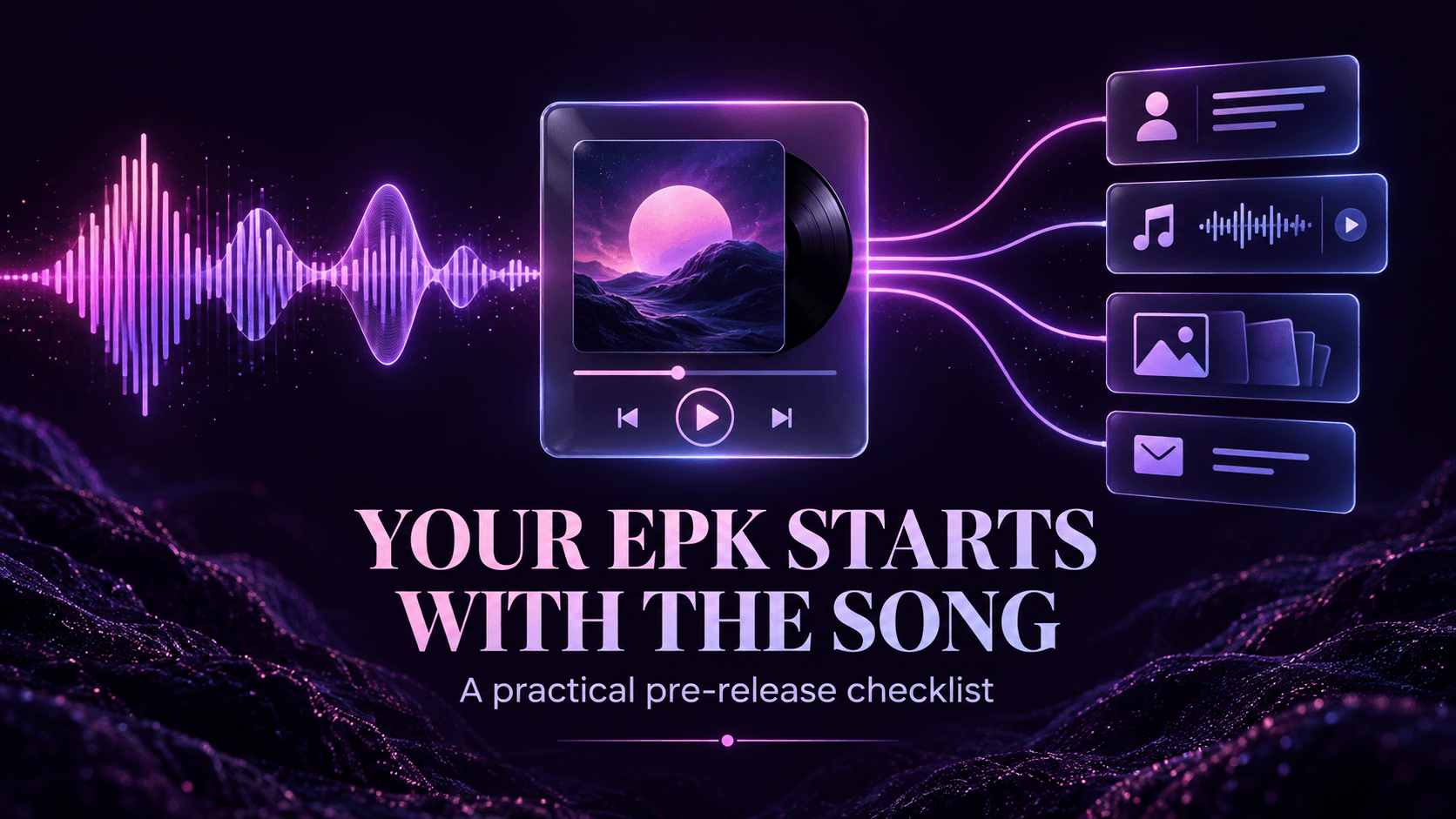
An EPK—short for electronic press kit—is one shareable page that helps a venue, writer, playlist curator, or collaborator quickly understand your music and know how to contact you. It should not be a folder of attachments or a long autobiography. It is a clear, current introduction to your artist project.
For an independent musician preparing a release, an EPK is most useful when it answers three things without making someone search: what does this artist sound like, what is happening now, and where can I find the assets or get in touch?
This guide shows what to include, how to tailor the page for the opportunity in front of you, and how to build your EPK from the song up.
What an EPK is—and what it is not
An EPK is a professional page for people who may cover, book, program, or work with you. It gathers your artist bio, music, photos, release information, links, and contact details in one place.
It is different from an artist website or a fan-facing bio link:
An EPK helps an industry contact evaluate you and find usable assets quickly.
An artist website or Tune.page can be a broader home for fans, releases, and your ongoing story.
A pitch email is the short, personal note that explains why you are reaching out to one specific person. Your EPK is the link that supports that note.
You do not need a long list of accomplishments. A new artist can make a useful EPK with a clear bio, one or two strong tracks, good images, and a reliable contact route.
The eight essentials of an effective musician EPK
Most EPK checklists come back to the same core materials: music, a bio, images, video, press or milestones, live information, social links, and contact details. CD Baby’s EPK checklist is a helpful outside reference for those basics. The following version is designed for a musician who wants a page people can actually use.
1. A short, specific artist bio
Start with a concise paragraph that a writer or promoter can understand on one read. It should say what you make, where you are based if it matters, and what makes the current project worth hearing.
Use this structure:
[Artist name] is a [genre or sonic lane] artist from [location, if relevant]. Their music pairs [sound or production detail] with songs about [theme or emotional world]. Their new [single/EP/project], [title], explores [one concrete story or tension].
Here is a fictional example:
Maya Rowan is a Los Angeles alternative-pop artist whose intimate vocals and analog synth textures frame songs about rebuilding after change. Her new single, “No Return Address,” turns a late-night breakup conversation into a slow, defiant release.
Avoid writing that could describe any artist: “unique sound,” “genre-bending,” and “destined to take over” do not give a busy reader much to work with. Keep a longer version lower on the page if you have a fuller story to tell.
2. Your best playable music
Lead with one current song or two tracks that represent your sound now. Do not make the visitor open several tabs or hunt through a full discography before they can listen.
For an unreleased track, make sure you have permission to share it with the people receiving the page. If you are pitching after release, link to the services where the song is available and make the most relevant track easy to play in the EPK.
The song selection should match the opportunity. A booker may need to hear what you can deliver onstage. A writer covering a new single needs the release you are pitching, not an older track that no longer represents the project.
3. A release snapshot
Add the facts someone may need to write about or program the release:
title and release date;
format, such as single, EP, or album;
primary genre or a clear description of the sound;
key collaborators and credits you have permission to share;
one short sentence about the song’s story or creative hook;
official artwork.
Keep it concise and truthful. It gives a writer or curator useful language and keeps your pitch, social posts, and EPK consistent.
Start with the song before writing the EPK
The hardest part of an EPK is often not uploading the files. It is describing the music clearly.
Before you write the bio or release snapshot, create a one-paragraph song brief. Define the track’s identity, mood, central theme, production character, likely listener context, and the strongest angle to lead with. That gives every section of the EPK a common language instead of making your bio, song description, and pitch feel disconnected.
Tunepact Song DNA is designed for that pre-release step. You can upload an MP3 to explore the song’s identity, production insights, audience perspective, marketing opportunities, and content ideas. Review the output and edit it so it reflects your own judgment and voice before using it publicly.
For the fictional example above, the song brief might be:
Atmospheric alternative pop with intimate vocals, warm analog synths, and a chorus that widens after a restrained first verse. The emotional turn is deciding to stop reopening a relationship that has already ended. Lead with the contrast between a soft vocal delivery and a quietly defiant message.
That one brief can become the bio’s release line, the description beside the music player, the subject of a pitch email, and the opening hook for a short video. It also makes it easier to build a page that feels like one artist, not a collection of unrelated assets.
4. Press photos and artwork that are ready to use
Include a small, useful selection rather than every image you have. At minimum, choose:
one clear portrait or artist image;
one landscape image that works for event listings or articles;
the current release artwork;
live photos if booking is a goal.
Use images you have the right to share and credit the photographer where appropriate. Make sure a recipient can access a high-resolution version when they need one.
5. One strong video or piece of live proof
For a music video, link to the best official version. For bookings, a well-shot live clip can be more useful than a polished video because it shows what a room can expect.
If you are early in your live career, do not invent a history. Use the strongest evidence you have: a real small-room performance, a rehearsal clip with good sound, or a focused video.
6. Press, achievements, and context—only when real
Include a short quote from legitimate coverage, a recent feature, a festival appearance, or a confirmed milestone if you have it. Link back to the source. If you do not have press yet, leave the section simple rather than adding vague social proof or unverified claims.
An EPK should make the recipient’s work easier, not ask them to fact-check it.
7. The right information for the right opportunity
You can use one EPK as the foundation, but change what appears first depending on your purpose.
Tailor your EPK to the opportunity
You can use one EPK as the foundation, but change what appears first depending on your goal.
If you are pitching a venue, promoter, or festival:
Lead with your playable music and live-performance evidence. Include your location, performance history, live photos, and a direct booking contact.
If you are pitching a blog, journalist, or radio contact:
Lead with the release story and ready-to-use assets. Include a short bio, release date, artwork, press photos, credits, and easy access to the music.
If you are pitching a collaborator or industry contact:
Lead with your current creative direction and a clear next step. Include a focused bio, your strongest music, selected work, and a direct contact route.
Your EPK’s job is to remove friction when a real opportunity appears.
8. A direct contact route and working links
Make it easy to reach the right person. List the booking, management, press, or artist contact that actually receives messages. Test the email address, contact form, streaming links, and social links on a phone.
Use one professional page instead of attaching large files to every outreach email. A hosted EPK can be updated after a new release, a new show, or a new photo without asking everyone to download another version.
Build and share your EPK in a practical order
Use this pre-release sequence:
Clarify the song. Write or refine your song brief before you decide what the page should say.
Choose the goal. Is the next outreach about booking, press, or general industry introductions? Let that determine the order of the page.
Gather only current assets. Pick the strongest music, images, video, and achievements you can support.
Publish one shareable link. Make sure it reads well and plays correctly on mobile.
Send a short, personal pitch. Explain why you contacted that person, then give them the EPK link.
Review it after every meaningful change. Update the release details, links, photos, and contact information as your project moves forward.
Tunepact’s free EPK Builder lets you create and publish a hosted EPK with a music player, bio, photos, social links, press and awards sections, events, and a contact form. It includes two templates, an AI bio writer, and three AI-generated images per EPK; review generated copy and images before publishing them.
The strongest EPKs do not try to convince everyone. They give the right person a clear, accurate reason to listen—and make the next step easy.
Start with your song in Tunepact Song DNA, then turn that clarity into an EPK you are ready to share.
Make YOUR Music Move.