Boosting Your Music Royalties as an Independent Artist in 2024
You probably saw the news about streaming platforms changing how they pay out and thought, "Great, another hoop to jump through." It feels like the rules are always changing, and not in your favor. But I see it differently. These new rules, especially the ones about stream counts, force a better strategy. You can absolutely earn more from your music this year, but it means getting smarter about how you release, promote, and protect your work. It's less about chasing a viral moment and more about building a consistent, informed plan for every single song.
Get Past the 1,000-Stream Hurdle
What the new threshold means for you
Spotify’s policy of requiring at least 1,000 streams in 12 months for a track to earn royalties has changed the game. This isn't an arbitrary number. It’s a filter to fight fake streams and make sure money goes to artists with real listeners. For you, it means every release needs a clear plan to hit that baseline. You can’t just upload a song and hope for the best.
The mistake I see a lot of artists make is assuming their music will just find an audience on its own. It won't, at least not consistently enough to clear these new thresholds. You need to treat each release like a small campaign, with a promotional push ready to go before the track even drops, not after you see if it catches on.
What you actually get paid per stream
It’s important to know what you really get paid per stream. The rate varies a lot, depending on the platform, your distribution deal, and where your listeners are. For example, one recent report highlighted by Exclaim! found that the average for Independent Artist Per-Stream Royalty Rates 2024 was about $3.41 per 1,000 streams on Spotify.
That number gives you a real target. If you hit the 1,000-stream mark, you might earn around $3.41. Want to make $100 from that track? You’ll need about 29,325 streams at that rate. Knowing this helps you set realistic goals for your promotion. Don't just chase streams; chase qualified streams that actually get you paid.
Use Your Data to Find the Right Listeners
Find your song's audience before you release it
You can get a head start by understanding where your music fits before you even release it. A tool like Tunepact Song DNA analyzes your unreleased track to understand its sound, mood, and ideal listener. Imagine knowing your song's core characteristics before you spend a dime on promotion.
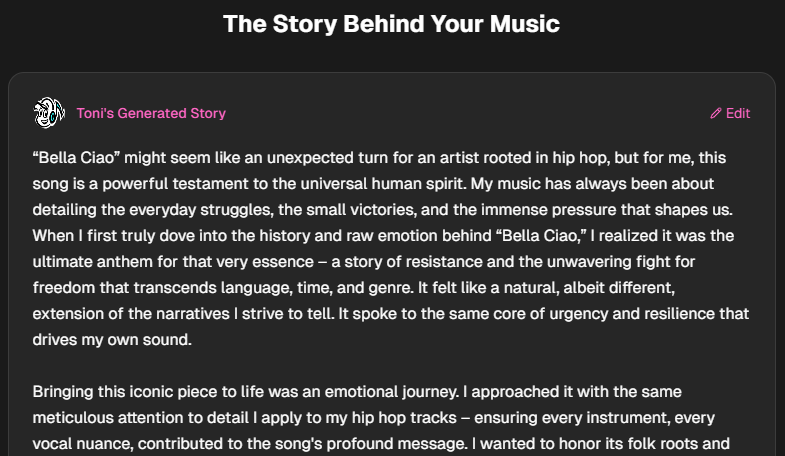
If the analysis tells you your new track is "upbeat, indie-pop, perfect for study or focus playlists," you've just been handed a roadmap. You know to target those kinds of playlists, not ones for a heavy metal crowd. This helps you aim your social media posts, pitch to the right curators, and even design your artwork to match the vibe, all of which makes it easier for algorithms to connect your music with the right ears.
Use your analytics to improve your next release
Once your music is out, the data keeps coming. Your analytics dashboards tell you who’s listening, where they are, and what other artists they like. Don't just glance at your total stream count; look at the demographics.
For example, if your analytics show a spike in listens from Germany on Tuesday evenings, that's a direct instruction. Schedule your next Instagram Live for that time and talk directly to your German listeners. Or search for German indie blogs to pitch your next single to. You can find more ways to use these numbers with essential music analytics tools. This isn’t guesswork; it’s using real information to refine your approach with every release.
Choose a Good Distributor and Avoid Fraud
Pick a distributor that protects your money
Your distributor is your financial partner, not just a pipeline to streaming services. Choosing the right one is one of the most important decisions you'll make. Don't just pick the cheapest option. Look for a partner with transparent reporting, clear communication about royalty splits, and strong anti-fraud measures.
A common mistake is skipping the fine print. You need a distributor who is on your side, who is proactive about platform changes, and who protects you. Ask them about their policies on artificial streams and how they handle payouts. A good distributor acts as a shield, making sure your legitimate streams turn into income.
Understand how the industry is fighting fraud
You’ve probably run into "Know Your Customer" (KYC) policies with your bank. They’re becoming standard in music distribution, too. This is when your distributor verifies your identity. It’s a necessary step to prevent fraud and make sure that real artists like you are the ones getting paid.
The industry is cracking down hard on fake streams from bots and click farms. If someone offers to sell you streams or guarantees a playlist spot for a fee, run the other way. Those schemes are a huge red flag. Getting involved can get your music removed, your accounts banned, and your real earnings frozen. Protect your work and your income by staying away from anything that feels like a cheat.
How AI Can Actually Help

Get your music on algorithm-driven playlists
AI is what powers the recommendation engines that decide what listeners hear next. Spotify’s AI DJ and personalized playlists are built on it. This means your music needs to be "legible" to an algorithm, not just a human curator. Consistency in your genre, mood, and instrumentation helps the AI learn your sound.
The metadata you attach to your song (the genre tags, the moods, the instrumentation) are all data points for the AI. While there’s no magic button, releasing high-quality, sonically consistent music and encouraging saves and shares sends strong signals to these recommendation engines. If you want to learn more about this, there are guides on how AI music marketing works.
Use AI tools to speed up your workflow
For an independent artist doing everything alone, AI tools can be a huge help. They can speed up your process so you can release music more consistently. Think about AI-powered mastering that gives your track a professional polish in an hour, without the cost of a studio engineer. Or tools that can clean up a vocal track or help you find a chord progression when you're stuck.
The key is to use AI as an assistant, not a replacement for your own voice. Use it to get over technical hurdles or speed up boring tasks. For example, using an AI tool for a quick, solid mix lets you spend your time on the creative work (writing the next song and connecting with your listeners) so you can keep your momentum without burning out.
A Promotion Plan That Gets You Past 1,000 Streams
Create posts that get people to listen
Just posting a link to your new song isn't a strategy. You need a plan to drive people to your music and get them to engage. Your social media is a funnel. Instead of just a link, share the story behind the song, a 15-second clip that grabs attention, or a look at your creative process. Make it personal.
Your goal is to turn a casual follower into a dedicated listener. Create a simple content plan for each release with teasers, behind-the-scenes photos, and clear calls to action that lead directly to your music. Ask your audience to save your track or add it to their own playlists. These actions are exactly what algorithms look for and what lead to real stream growth.
Promote your music across different platforms
Your audience is spread out, so your promotion should be too. Use TikTok or Instagram Reels for short, catchy video clips that point to a longer video on YouTube. Use your email list to send exclusive updates and direct links on release day. Your website should be the central hub that connects everything.
Think of it as a web where every strand leads back to your music. You might tease a new song on TikTok, share a longer clip on Instagram, send a private preview to your email subscribers, and then direct everyone to Spotify or Apple Music when the song drops. This approach helps you reach more people and keep your current fans excited. It's also smart to keep an eye on other significant music industry trends to keep your strategy fresh.
Frequently Asked Questions About Music Royalties
How does the Spotify 1,000 stream rule specifically affect my independent artist income?
The Spotify 1,000 stream rule means your track must hit 1,000 unique streams within a 12-month period to be eligible for any royalties at all. If your song doesn't reach this threshold, you won't earn any money from it on Spotify, regardless of how many streams it accumulated below that number. This pushes independent artists to be more strategic and promotional with every release to ensure their music qualifies for payouts.
What are the most effective DIY music distribution strategies to prevent streaming fraud?
The most effective DIY distribution strategy to prevent streaming fraud involves choosing a reputable distributor with strong anti-fraud measures and transparent policies. Always ensure your distributor implements robust KYC (Know Your Customer) protocols to verify your identity. Additionally, actively avoid any third-party services that promise guaranteed streams or playlist placements through suspicious means, as these often involve bots and can lead to account bans or withheld royalties.
Can AI tools genuinely help me get more music streams and increase my royalties?
Yes, AI tools can genuinely help you get more music streams and increase your royalties, but indirectly. AI helps by optimizing your music for algorithmic discovery on streaming platforms and by streamlining your production workflow. By using AI to understand your song's characteristics, target the right audience, and produce more consistent, high-quality releases, you increase your chances of being discovered by listeners and hitting those stream thresholds.
What is a realistic per-stream royalty rate I can expect as an independent artist in 2024?
A realistic per-stream royalty rate for an independent artist in 2024 can vary significantly by platform and distribution deal, but often falls within the range of $0.003 to $0.005 per stream. For example, a recent report indicated an average of around $3.41 per 1,000 streams on Spotify. Remember, this is an average, and your actual earnings depend on many factors including listener geography and subscription type.