

Music Marketing Journey Part 6: How to Define Your Goals
Welcome back to the TunePact Music Marketing Journey! In this sixth installment, we're diving into one of the most crucial steps for any independent artist: defining your music marketing goals. Without clear objectives, even the most brilliant marketing efforts can feel like navigating without a compass. Let's transform your artistic vision into actionable steps that drive real results for your music career.
The Foundation: Why Music Marketing Goals Matter for Independent Artists
As an independent musician, your passion fuels your art. But to turn that passion into a sustainable career, you need more than just great music; you need a strategic approach to getting it heard. This is where well-defined music marketing goals become indispensable, acting as the bedrock of your success.
Beyond Ambition: The Power of Defined Objectives
Many artists harbor ambitious dreams: "I want more fans," "I want to tour," or "I want to make a living from my music." While inspiring, these broad statements often lack the specificity needed to guide daily actions. Vague goals can lead to scattered efforts, wasted time, and ultimately, frustration.
When your goals are clear and precise, they provide a roadmap. They tell you exactly what you're working towards, helping you prioritize tasks and allocate your limited resources effectively. This clarity is not just about efficiency; it’s about maintaining motivation and ensuring every step you take contributes to your overall vision.
Think of it this way: without specific targets, it’s impossible to know if you’re making progress. Defined objectives allow you to measure success, learn from failures, and adapt your approach, ensuring your independent artist marketing plan is always moving forward. For a deeper dive into comprehensive planning, check out The Ultimate Guide to Music Marketing, which highlights the importance of setting practical goals.
Connecting Your Marketing Efforts to Your Vision
Your music marketing isn't just about promotion; it's about building a brand, connecting with your audience, and creating a sustainable career. Well-defined goals ensure that every tweet, every email, and every live performance serves a greater purpose.
They help you connect the dots between your creative output and your business objectives, transforming abstract desires into tangible achievements. This strategic alignment is what elevates an artist from hobbyist to professional. By truly understanding and setting setting smarter goals for independent artists, you pave the way for a more impactful and rewarding music journey.
Deciphering S.M.A.R.T. Goals for Musicians: Your Blueprint for Success
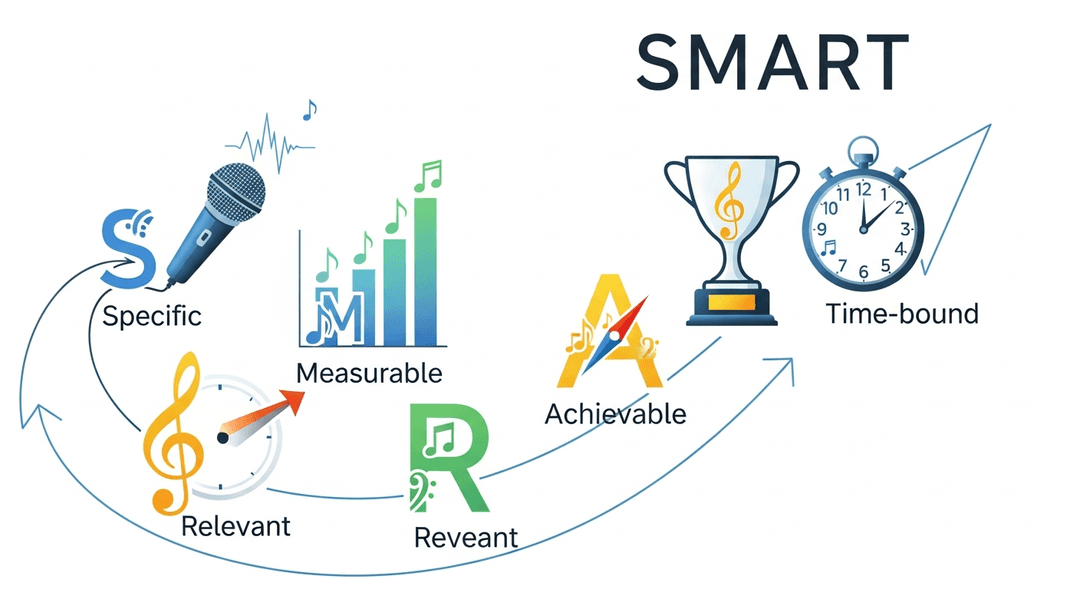
To move beyond vague aspirations, independent artists need a framework that brings structure to their ambitions. The S.M.A.R.T. framework is a globally recognized tool that transforms broad ideas into clear, actionable objectives. It’s your blueprint for setting effective music marketing goals.
Breaking Down the Acronym: Specific, Measurable, Achievable, Relevant, Time-bound
Let’s unpack each component of the S.M.A.R.T. acronym and see how it applies to your journey as a musician:
-
S - Specific: Your goal should be clear and well-defined, not general. Ask yourself: What exactly do I want to achieve? Who is involved? Where will this happen? Why is this important?
- Vague: "Get more listeners."
- Specific: "Increase my monthly listeners on Spotify."
-
M - Measurable: You need a way to track your progress and determine when you've achieved your goal. How will you know when you've reached it? What metrics will you use?
- Vague: "Get more likes on Instagram."
- Measurable: "Achieve 500 new Instagram followers."
-
A - Achievable: Your goal should be realistic and attainable, given your resources and current standing. Is this goal within my reach? Do I have the necessary skills and resources?
- Vague: "Sell out an arena tour next month."
- Achievable: "Book 3 local gigs at small venues within the next quarter."
-
R - Relevant: The goal should align with your broader artistic vision and overall music career objectives. Is this goal worthwhile? Does it fit with my long-term plans?
- Vague: "Learn to play the tuba" (if you're a guitarist).
- Relevant: "Increase engagement on my music videos to build a stronger connection with my audience."
-
T - Time-bound: Every goal needs a deadline. This creates a sense of urgency and helps you prioritize. When do I want to achieve this goal?
- Vague: "Release new music someday."
- Time-bound: "Release my new single by October 31st."
Common Misconceptions and How to Avoid Them
One common pitfall is confusing an activity with a goal. For instance, "post on social media daily" is an activity, not a S.M.A.R.T. goal. A S.M.A.R.T. goal would be "Increase my Instagram engagement rate by 2% by the end of the month by posting daily and responding to all comments within 24 hours."
Another misconception is that "achievable" means "easy." Achievable goals should still challenge you but be rooted in reality. As an independent artist, it's crucial to assess your current resources, time, and budget. Don't set yourself up for disappointment by aiming for metrics that are only feasible for major label artists with huge marketing budgets. Instead, focus on incremental growth that you can realistically manage and celebrate.
Crafting Your Music Marketing Goals with S.M.A.R.T. Principles
Now that you understand the S.M.A.R.T. framework, let's put it into practice. This section will guide you through transforming those general desires into concrete, actionable music career objectives that form the backbone of your artist promotion strategy.
From Vague Desires to Actionable Objectives
The journey from "I want more listeners" to a S.M.A.R.T. goal involves asking the right questions and getting specific. Let's take that common desire and refine it:
- Start with the desire: "I want more people to listen to my music."
- Make it Specific: Where do you want them to listen? Which platform? "I want to increase my monthly listeners on Spotify."
- Make it Measurable: By how much? "I want to increase my monthly listeners on Spotify by 25%."
- Make it Achievable: Is 25% realistic given your current reach and marketing efforts? If you have 100 listeners, 25% is 25 more. If you have 10,000, 25% is 2,500. Adjust based on your context. "I want to increase my monthly listeners on Spotify by 25% (from 1,000 to 1,250)."
- Make it Relevant: Does this align with your overall growth strategy? Yes, more listeners lead to more fans, more streams, and potential revenue.
- Make it Time-bound: By when? "I want to increase my monthly listeners on Spotify by 25% (from 1,000 to 1,250) within the next three months."
This refined goal is clear, actionable, and provides a definite target to work towards. You now know exactly what you need to do and by when.
Practical Examples for Independent Artists
Here are some examples of S.M.A.R.T. music marketing goals across various aspects of your career:
- Streaming Numbers: "Increase my average daily streams on Apple Music by 15% from my current 500 to 575 within the next 60 days, by pitching to curated playlists and promoting my new single."
- Social Media Engagement: "Grow my Instagram follower count by 200 new, engaged followers by the end of next month, through consistent posting (3 times/week), interacting with comments, and running one targeted ad campaign."
- Email List Growth: "Expand my email subscriber list by 50 new contacts by the end of the quarter, by promoting my sign-up link on all social channels and offering a free demo track to new subscribers." This is crucial for cultivating your fanbase effectively.
- Gig Bookings: "Secure 2 new paying gigs at local venues within the next two months, by sending out 10 personalized cold booking emails per week and following up diligently." Need help with this? Check out our guide on crafting the ideal cold booking email for gigs.
- Press Coverage: "Get featured in one local music blog or online publication within the next six weeks, by researching relevant outlets and sending out targeted press kits."
- Website Traffic: "Increase organic traffic to my artist website by 10% by the end of the year, by optimizing my blog content for SEO and regularly sharing new posts."
When setting your goals, always consider your current stage. A brand-new artist will have different achievable goals than an artist with a few EPs under their belt. Be honest about your capacity and resources. Many of these efforts fall under effective Digital Marketing Strategies for Musicians, which can be tailored to your specific S.M.A.R.T. objectives.
Finally, clearly define your deadlines. A goal without a deadline is just a wish. Assign a specific date or timeframe to each objective to create accountability and urgency in your how to set music goals process.
TunePact's Role: Tools for Setting, Tracking, and Achieving Your Goals
Defining your music marketing goals is the first step; achieving them requires strategic execution and consistent monitoring. This is where TunePact steps in, providing independent artists with the tools to not only set S.M.A.R.T. goals but also to track their progress and adapt their strategies effectively.
Leveraging TunePact for Goal Definition and Planning
TunePact understands that independent artists need more than just ambition; they need actionable plans. Our platform is designed to help you structure your independent artist marketing plan from the ground up. You can utilize our resources to:
- Organize Your Objectives: Use TunePact to document your S.M.A.R.T. goals, breaking them down into smaller tasks and assigning deadlines. This structured approach keeps you accountable and focused.
- AI Music Marketing Planner: Our AI Music Marketing Planner is a game-changer. It can help you ideate and refine your goals, suggesting relevant strategies and tactics based on your current stage and objectives. Simply input your broad ambitions, and the AI can help you craft specific, measurable steps, effectively guiding your artist promotion strategy.
- Resource Management: Plan how you'll allocate your time and budget towards each goal within the platform, ensuring you're working efficiently and not overextending yourself.
By centralizing your planning within TunePact, you create a cohesive strategy that supports your artistic and career aspirations.
Monitoring Progress and Adapting Your Strategy
Setting goals is only half the battle; tracking their progress is crucial for success. TunePact provides robust analytics and monitoring features to keep you informed:
- KPI Tracking: Our platform allows you to track key performance indicators (KPIs) directly relevant to your S.M.A.R.T. goals. Whether it's streaming numbers, social media engagement rates, email list growth, or website traffic, you can monitor these metrics against your defined targets. Learn more about how to track music performance for career growth using our tools.
- Data-Driven Insights: TunePact's analytics provide insights into what's working and what's not. If a particular marketing effort isn't yielding the desired results, the data will highlight it, prompting you to re-evaluate and adjust your approach.
- Regular Review Cycles: We encourage artists to regularly review their progress against their goals. TunePact makes this easy by presenting your data clearly, allowing you to see at a glance if you're on track or if your strategy needs a pivot.
This iterative process of setting, tracking, and adapting is fundamental to sustainable growth. TunePact empowers independent artists to take control of their artist promotion strategy, making data-informed decisions that lead to tangible success and help them achieve their music marketing goals.
Beyond the Numbers: Sustaining Momentum and Growth in Your Music Career
While S.M.A.R.T. goals provide structure and measurability, the journey of an independent artist is also paved with unforeseen challenges and the need for unwavering resilience. Achieving your music career objectives goes beyond just hitting numbers; it's about building a sustainable path and maintaining your creative spirit.
Overcoming Obstacles and Staying Motivated
Every artist encounters setbacks. A campaign might underperform, a gig might fall through, or motivation might wane. It's essential to develop strategies to navigate these obstacles:
- Embrace Learning: View setbacks not as failures, but as opportunities to learn and refine your artist promotion strategy. Analyze what went wrong, adapt your approach, and move forward.
- Celebrate Small Wins: Don't wait for the grand achievement to celebrate. Acknowledge and appreciate every small milestone you hit along the way. This builds momentum and reinforces your commitment to your goals.
- Build a Support System: Connect with other independent artists, mentors, or industry professionals. Sharing experiences and challenges can provide valuable perspective and encouragement.
- Prioritize Self-Care: The music industry can be demanding. Ensure you're taking care of your physical and mental well-being to avoid burnout and maintain your creative energy.
Remember that consistent effort, even small steps, adds up over time. Staying motivated is a continuous process, and sometimes, a short break or a shift in perspective is all you need.
The Iterative Process of Goal Setting and Adjustment
Goal-setting is not a one-time event; it's an ongoing, dynamic process. Your independent artist marketing plan should be flexible, allowing for periodic review and revision. As your career evolves, your priorities and resources will change, and your goals should reflect that evolution.
Every quarter or six months, take the time to:
- Review Progress: Look at your S.M.A.R.T. goals. Did you hit your targets? Why or why not?
- Assess Relevance: Are these goals still relevant to your overall artistic vision and career stage? Has anything in the industry or your personal circumstances changed that might impact them?
- Adjust and Refine: Based on your review, adjust your existing goals, create new ones, or even let go of goals that no longer serve you. This adaptability is key to long-term success in how to set music goals effectively.
By embracing this iterative approach, you ensure that your music marketing goals always remain aligned with your most current aspirations and the realities of your music career, fostering continuous growth and resilience.
Frequently Asked Questions About Music Marketing Goals
What does the S.M.A.R.T. acronym mean for music marketing goals?
The S.M.A.R.T. acronym stands for Specific, Measurable, Achievable, Relevant, and Time-bound. For music marketing goals, it means ensuring your objectives are clear and precise (Specific), quantifiable so you can track progress (Measurable), realistic given your resources and stage (Achievable), aligned with your overall music career vision (Relevant), and have a clear deadline (Time-bound). This framework helps independent artists create effective and actionable music marketing goals.
How can independent artists make their music marketing goals achievable and realistic?
To make goals achievable and realistic, independent artists should honestly assess their current resources, time, budget, and audience size. Instead of aiming for viral superstardom overnight, focus on incremental growth. For example, if you have 100 followers, aiming for 200 is more realistic than 10,000 in a month. Break down larger aspirations into smaller, manageable steps, and consider your current skill set and capacity before setting targets. It's about setting challenges that inspire, not overwhelm, allowing for sustainable progress in your independent artist marketing plan.
What are practical examples of measurable music marketing goals?
Practical examples of measurable music marketing goals include:
- "Increase monthly listeners on Spotify by 20% (e.g., from 500 to 600) within the next quarter."
- "Grow my email list by 50 new subscribers by launching a new lead magnet within 6 weeks."
- "Achieve an average social media engagement rate of 5% across Instagram and TikTok by the end of the month."
- "Secure 2 feature placements on independent music blogs for my upcoming single release before its launch date."
- "Book 3 local open mic or small venue performances within the next 8 weeks."
Each of these examples specifies a number or percentage to hit and a timeframe, making them easy to track.
How can TunePact help me track my music marketing goals?
TunePact offers several features to help you track your music marketing goals effectively. Our platform allows you to document and organize your S.M.A.R.T. objectives. The AI Music Marketing Planner can assist in defining these goals with actionable steps. Crucially, TunePact's analytics tools enable you to monitor key performance indicators (KPIs) like streaming numbers, social media engagement, and fan growth against your set targets. This data provides clear insights into your progress, helping you identify what's working and where adjustments are needed, empowering you to track music performance for career growth and adapt your artist promotion strategy in real-time.
