How Do Independent Musicians Make Money on YouTube?
You’ve poured your heart into your music, recorded the tracks, shot a killer music video, and uploaded it to YouTube. Now you’re waiting. Maybe you’re checking your channel stats obsessively, hoping that one video will suddenly go viral and make you eligible for the YouTube Partner Program (YPP) for you. But the subscribers aren’t climbing fast enough, the watch hours feel like an impossible mountain, and it’s hard to see how this translates into actual income. You’re right to feel that way if you’re just uploading and hoping. Earning money on YouTube as an independent artist isn't about luck; it's about a strategic approach to meet their requirements, diversify your income streams, and build a real connection with your audience.
Accelerate Your Journey to YouTube Partner Program Eligibility
The first hurdle for most independent musicians looking to monetize on YouTube is getting into the YouTube Partner Program. This is where you gain the ability to earn ad revenue, activate Super Chat, channel memberships, and the merchandise shelf. Don't just upload; optimize your content and engagement to hit these milestones faster.
Understanding the YouTube Partner Program (YPP) Criteria
To join the YPP, YouTube has clear requirements. You need at least 1,000 subscribers, 4,000 valid public watch hours in the past 12 months, and you must adhere to all of YouTube's monetization policies. You'll also need an AdSense account linked to your channel to receive payments. Think of these as your minimum entry points; reaching them means you’ve started to build a foundational audience that YouTube recognizes.
Strategies to Hit 1,000 Subscribers Faster
Subscribers are your core audience, the people who want to see more of your work. To grow this number, consistency is key. Don’t just upload a music video once a month; mix it with behind-the-scenes content, short performances, or even vlogs about your creative process. Make sure every video includes a clear, engaging call to action. Instead of just saying "subscribe," try something like, "If you want to follow my journey writing my next album, hit subscribe so you don't miss any updates!" Also, reply to comments, engage with your viewers, and make them feel like part of your community. This direct interaction turns casual viewers into loyal fans who are more likely to subscribe and stick around.
Boosting Your Watch Hours to Reach 4,000
Watch hours are often the harder metric to hit, but they’re essential because they indicate how much time people are actually spending with your content. Focus on creating longer-form videos. A 3-minute music video is great, but a 10-minute "making of" video, a live performance recording of a full set, or a Q&A session can accumulate watch time much faster. Organize your videos into playlists so viewers flow from one video to the next without leaving your channel. For example, create a "Live Performances" playlist or a "Songwriting Process" series. Cross-promote your YouTube channel on all your other social media platforms, directing your existing fans to specific videos. And an important mistake to avoid: Never buy subscribers or views. YouTube's systems are sophisticated enough to detect this, and it can lead to your channel being disqualified from the YPP entirely, wasting all your effort. For more in-depth advice on content planning, check out our guide on YouTube strategies and tools for musicians, and get some creative music video promotion ideas to boost those views.
Diverse Income Beyond YouTube Ads for Musicians
Once you're in the YPP, ad revenue is just one piece of the pie. Savvy independent musicians understand that true income diversity comes from multiple sources on the platform, utilizing direct fan support and merchandise.
Understanding YouTube AdSense Revenue for Artists
AdSense is how YouTube pays you for ads shown on your videos. You get a share of the revenue generated from ads played before, during, or after your content. The amount you earn is measured by RPM (revenue per mille, or per 1,000 monetized views). For music channels, RPMs can vary widely, but typically range from $1 to $5. So, if your RPM is $3 and you get 100,000 monetized views, that's $300. Factors like your audience's location, the type of ads shown, and whether viewers complete the ads all influence your RPM. While ad revenue is a good starting point, it's rarely enough to sustain an independent music career on its own. It's important to remember that ad revenue is just one component of the broader digital music market, which is constantly evolving, as highlighted in reports like the IFPI Global Music Report: Industry Statistics.
Direct Fan Support through Super Chat, Stickers, and Memberships
This is where your most dedicated fans can directly support you financially. During live streams or video premieres, viewers can use Super Chat or Super Stickers to highlight their messages or send virtual gifts, and you receive a percentage of that. This is particularly effective during interactive sessions like Q&As or exclusive performances. Even more impactful are channel memberships. You can offer different tiers of membership with varying benefits, like exclusive content (early access to demos, behind-the-scenes footage), member-only live streams, custom emojis, or even monthly Q&A calls. Imagine an artist who offers a $5/month "Fan Club" tier for early access to new singles and a $20/month "Patron" tier that includes a monthly virtual hang-out and a shout-out in their next music video. This creates a sustainable, recurring income stream from your biggest supporters. For more ways independent artists generate income, explore our article on how independent musicians make money.
Merchandise Shelf Integration for Musicians
YouTube also allows you to integrate a merchandise shelf directly below your videos, showcasing your official merch. This makes it incredibly easy for fans to buy your t-shirts, CDs, vinyl, or other branded items while they're already engaged with your music. You'll need to partner with a supported merchandise retailer (like Spring or Fanjoy) and link your store to your YouTube channel. Promote your merch organically in your videos and community posts. For example, wear your band's t-shirt in a video and point to the shelf below, or announce a new merch drop in a Community tab post.
Tunepact tip: Get a personalized, step-by-step marketing plan for your next release. Plan your release →
Using YouTube Content ID for Your Music Royalties
Content ID is a powerful tool that helps you protect your music and earn royalties even when others use it in their videos.
What is YouTube Content ID and How Does It Work?
YouTube's Content ID system is essentially a digital fingerprinting system. When you upload your music to Content ID, it creates a unique identifier for your audio. Then, YouTube constantly scans every new upload on the platform. If someone uses your copyrighted music in their video—whether it's a cover, background music in a vlog, or a short snippet in a compilation—Content ID detects it. You then have options: monetize the video (meaning you collect the ad revenue from their upload), track its viewership, or even block the video from being seen. For most independent artists, the goal is to monetize, turning unauthorized usage into a revenue stream.
Qualifying for Content ID as an Independent Artist
As an independent artist, you typically can't apply for Content ID directly through YouTube. Instead, you'll work with a trusted music distributor or aggregator. Services like TuneCore, DistroKid, or CD Baby offer Content ID services as part of their distribution packages. When you upload your music through them, they submit your tracks to YouTube's Content ID system on your behalf. They manage the claims and collect the revenue, then pay you your share, often for a small fee or percentage. This is the most practical way for an indie artist to get their music registered and protected.
Maximizing Your Royalties and Avoiding Common Pitfalls
Once your music is in Content ID, the system works for you passively. You could be earning money from a fan using your song in their travel vlog, or a small creator making a short film with your instrumental track. This passive income can add up over time, especially as your music gains traction. A common mistake is claiming music you don't fully own the rights to, such as public domain works or un-cleared samples. This can lead to disputes and even strikes against your channel. Always ensure your metadata is accurate and complete when submitting your music through your distributor. This helps Content ID correctly identify your tracks and minimizes false claims.
Cultivate a Thriving Community with Engagement Strategies for Artists

Monetization involves more than algorithms; it's about people. A loyal, engaged community is your most valuable asset on YouTube, leading to more views, longer watch times, and direct financial support.
Using YouTube Community Features
Don't overlook the Community tab on your YouTube channel. It's like a built-in social media feed where you can interact with your subscribers outside of video uploads. Use it to post updates, share photos, run polls, or ask questions. For instance, you could run a "vote for the next cover song" poll, giving your fans a direct say in your content and boosting their interaction with your channel. This not only keeps your audience engaged between video releases but also gives them a sense of ownership and connection to your journey.
Interactive Content Formats like Shorts, Polls, and Q&As
YouTube offers several formats to keep your audience engaged. YouTube Shorts are fantastic for quick, catchy content—snippets of new songs, behind-the-scenes glimpses, or personal messages. They can significantly boost discoverability. Beyond the Community tab, integrate polls directly into your videos or live streams to get real-time feedback. Hosting live Q&A sessions or interacting with chat during video premieres makes your channel feel personal and immediate. The official YouTube for Artists Guide to Fan Engagement has even more strategies and tools directly from the platform to help you build and engage your fanbase.
Analyzing Your Audience to Refine Your Strategy
YouTube Analytics is your best friend for understanding your audience. Examine the data to see who's watching your videos, where they're located, what other content they enjoy, and most importantly, which of your videos keep them engaged the longest. This information helps you refine your content strategy. If you see that your live acoustic sessions have a much higher retention rate than your music video reaction videos, you know where to focus your efforts. Understanding these insights is vital for consistent growth. Learn more about analyzing YouTube audience engagement, and consider using tools to track fan growth and engagement more closely.
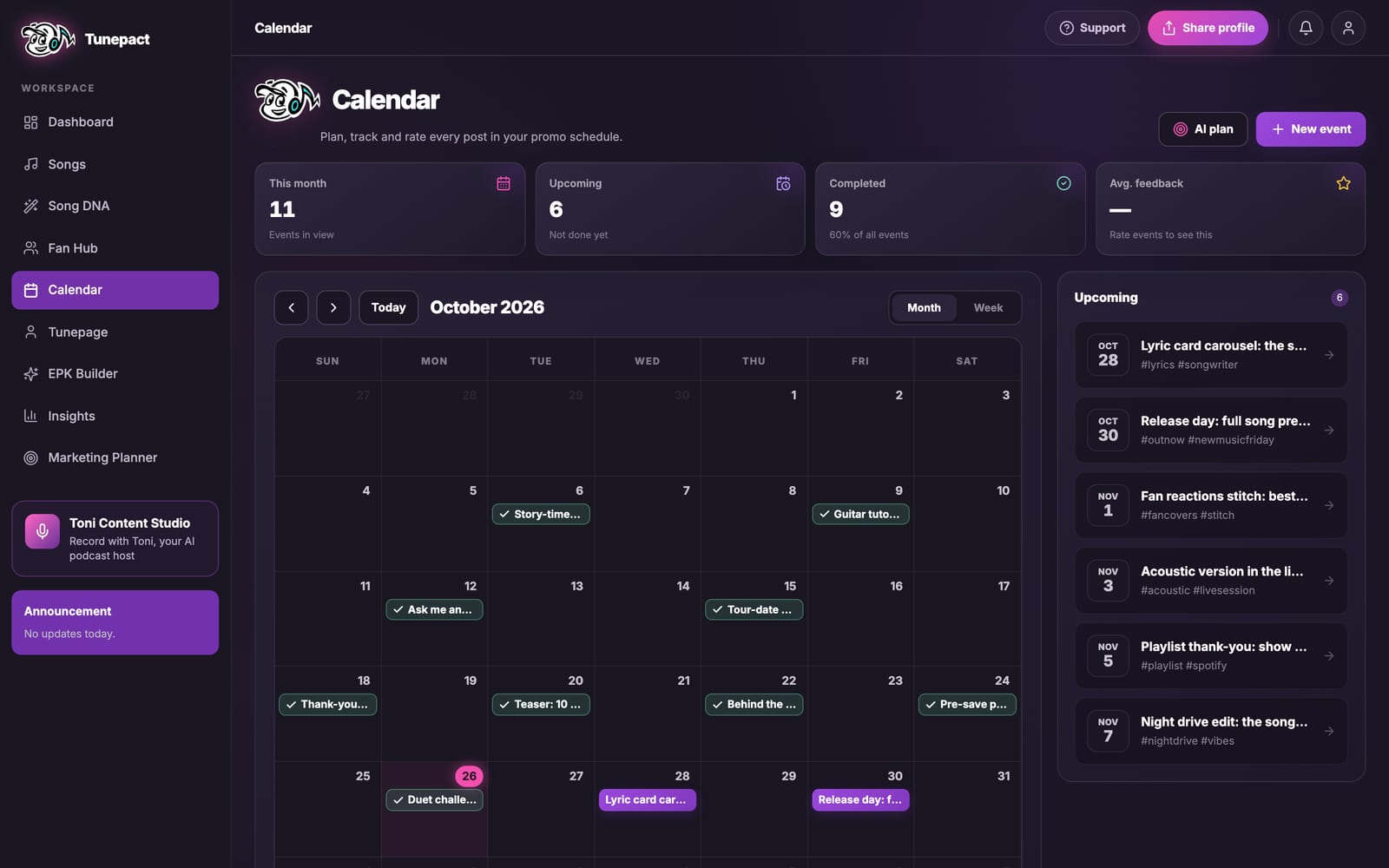
Plan Your YouTube Success with the AI Music Marketing Planner
Navigating all these strategies and consistently creating engaging content can feel overwhelming. That’s where a smart tool can make a real difference, helping you plan your content and promotion effectively.
Generating Content Ideas for Subscriber Growth
The AI Music Marketing Planner can significantly improve your brainstorming. Instead of staring at a blank screen, you can input details about your music and audience, and it will suggest video topics and content formats that are perfectly aligned with your goals—whether you're aiming for subscriber growth or watch hour milestones. It helps you think beyond just music videos.
Optimizing Your Release Schedule for Watch Hours
A consistent and strategic upload schedule is vital for accumulating watch hours. The planner helps you map out when to release different types of content, ensuring a steady stream that keeps your audience coming back. It can help you visualize how a series of shorter videos can lead into a longer piece, maximizing overall watch time.
Crafting Engaging Promotion Strategies
Once your content is planned, the next step is getting eyes on it. The AI Music Marketing Planner provides a personalized, step-by-step marketing plan for your next release. For example, you could input your new single into the planner and receive a week-by-week YouTube promotion plan. This might include specific YouTube Shorts ideas to tease the release, community post prompts to build anticipation, and cross-promotion tactics for other platforms, all designed to drive views, engagement, and conversion. You can get a personalized, step-by-step marketing plan for your next release with the AI Music Marketing Planner.
Frequently Asked Questions About YouTube Monetization for Artists
How long does it typically take for an independent musician to get monetized on YouTube?
The time it takes varies widely depending on consistency and promotion, but most independent musicians can expect it to take anywhere from 6 to 18 months of dedicated effort to meet the YouTube Partner Program eligibility requirements.
What are the most common reasons musicians fail to qualify for the YouTube Partner Program?
Musicians often fail to qualify due to not consistently meeting the 4,000 watch hours requirement, having copyright strikes on their channel, or not adhering to YouTube's community guidelines and monetization policies.
Can I earn money from cover songs on YouTube if I'm an independent artist?
Yes, you can earn money from cover songs on YouTube, but it requires proper licensing or revenue sharing agreements with the original copyright holders, typically handled automatically by YouTube's Content ID system or a distributor.
How much can an independent musician realistically expect to earn from YouTube ad revenue?
Realistically, YouTube ad revenue for independent musicians is often quite low initially, typically yielding a few dollars per 1,000 monetized views, making it a supplementary income rather than a primary one for most artists.
