Music Licensing 101: How Do Indie Musicians License a Cover Song?
As an indie musician, you're constantly seeking innovative ways to connect with new fans and showcase your unique artistry. Performing a compelling cover song can be a powerful tool in your arsenal, often serving as a bridge to introduce listeners to your original work. However, the world of music rights can feel like a labyrinth, especially when it comes to legally releasing a cover.
TunePact is here to demystify the process. This comprehensive guide will walk you through everything you need to know about securing an indie musician cover song license, ensuring you stay compliant, maximize your potential earnings, and leverage cover songs for sustainable career growth without any legal headaches.
Why Cover Songs Are Essential for Indie Musicians (and Why Licensing Matters)
Cover songs aren't just about paying homage to your favorite artists; they're a strategic asset for independent musicians looking to expand their reach and build a dedicated fanbase. A well-chosen and expertly performed cover can go viral, attracting attention that might otherwise be hard to come by.
Fans often search for their favorite songs, and if your version appears, it can lead them directly to your original music. This cross-pollination is invaluable for emerging artists, offering a proven pathway to increased engagement and discovery.
The Power of Covers for Fan Growth
- Audience Expansion: Covers expose your music to fans of the original artist, introducing them to your unique style and interpretation.
- Showcasing Versatility: They allow you to demonstrate your musical range, technical skills, and creative vision by reinterpreting familiar tunes.
- Engagement Boost: Covers often generate higher initial engagement on social media and streaming platforms, acting as a gateway to your original catalog.
- Building Credibility: Performing a popular song well can establish your credibility and artistry in the eyes of new listeners.
Navigating the Legal Landscape: A TunePact Approach
While the benefits are clear, the legalities of releasing cover songs are non-negotiable. Releasing an unlicensed cover can lead to serious consequences, including takedown notices, financial penalties, and damage to your reputation. Understanding copyright laws cover songs is crucial for any artist.
TunePact empowers you with the knowledge and tools to confidently navigate this landscape. We believe that legal compliance should be accessible, not an obstacle, for independent artists.
This guide will set the stage for a practical, step-by-step approach to securing the necessary licenses, ensuring your artistic journey remains smooth and legally sound.
Understanding Copyright Laws for Indie Musician Cover Songs
Before diving into the specifics of licensing, it's essential to grasp the fundamental concept of music copyright. Most people don't realize that every song actually has two distinct copyrights.
This distinction is crucial for any indie musician cover song license process, as it determines who you need to obtain permission from and for what.
Musical Work vs. Sound Recording: The Key Distinction
When we talk about a song, we're usually referring to two separate intellectual properties:
- The Musical Work (or Composition): This is the underlying melody, lyrics, and harmonic structure created by the songwriter(s). Think of it as the sheet music or the blueprint of the song. The copyright for the musical work belongs to the songwriter(s) and their publisher(s).
- The Sound Recording (or Master Recording): This is the specific performance and recording of the musical work. It's the actual audio file you hear. The copyright for the sound recording belongs to the performing artist(s) and/or the record label that funded or released the recording.
When you record a cover song, you are creating a new sound recording of an existing musical work. You are not allowed to use someone else's master recording without direct permission, which is typically much harder and more expensive to obtain.
For a cover, you're primarily concerned with licensing the musical work, not the original artist's sound recording.
Who Owns What? The Role of Songwriters and Publishers
The rights holders you need to consider for cover song licensing are primarily the songwriters and their music publishers. These entities control the rights to the musical composition.
Publishers manage these rights on behalf of songwriters, ensuring they receive royalties when their compositions are used. Understanding this framework is the first step in ensuring your cover song release is fully compliant.
For more foundational information on copyright law for musicians, an excellent resource is the What Musicians Should Know About Copyright - U.S. Copyright Office.
Essential Licenses for Indie Musicians: Mechanical & Synchronization Licenses
Navigating the various types of licenses can seem daunting, but for most indie musician cover song license situations, you'll primarily be dealing with two key types: mechanical licenses and synchronization licenses. Understanding when and how to secure each is vital for legal distribution.
The Mechanical License: Your Audio-Only Cover Song Pass
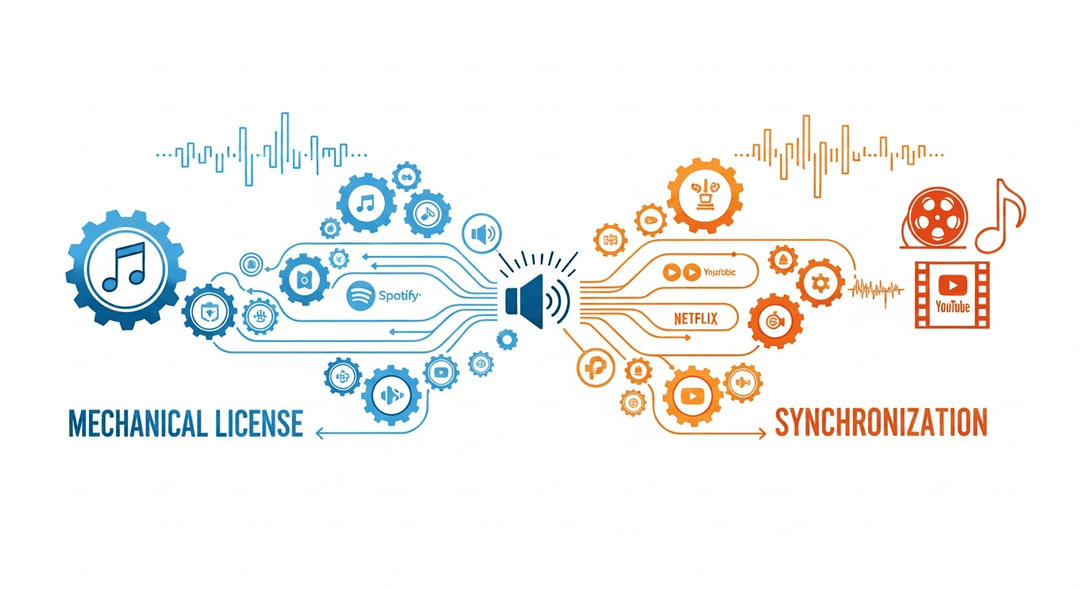
A mechanical license cover song is what you need to legally reproduce and distribute a copyrighted musical composition in an audio-only format. This includes:
- Digital downloads (e.g., selling your cover on Bandcamp or iTunes).
- Physical copies (CDs, vinyl records).
- Interactive streams (where listeners can choose what to play, like Spotify or Apple Music).
Under U.S. copyright law, once a song has been publicly released, anyone can obtain a mechanical license to record and distribute their own version, provided they pay a statutory royalty rate to the copyright holder. This is known as a "compulsory license."
You can obtain a mechanical license through several avenues:
- The Harry Fox Agency (HFA) via Songfile: This is a common and straightforward method, especially for U.S. releases. Songfile allows you to search for songs and purchase mechanical licenses directly.
- Licensing Agencies: Services like Easy Song Licensing or DistroKid's cover song licensing service can simplify the process, often handling the paperwork and royalty payments for a fee.
- Directly from the Publisher: While possible, this is generally more complex and time-consuming, as it requires identifying and contacting the specific publisher.
The statutory royalty rate for mechanical licenses in the U.S. is set by the Copyright Royalty Board. As of 2024, it's 12.4 cents per copy for recordings of five minutes or less. If your song is longer, the rate is 2.4 cents per minute or fraction thereof. This fee is paid to the original songwriter and publisher.
For a detailed guide on securing mechanical licenses, check out the Songtrust Guide: Permissions for Cover Songs, which offers practical advice from a major publishing administrator.
Synchronization License YouTube: When Video Meets Music
When you want to pair your cover song with any visual media – a music video on YouTube, a TikTok, an Instagram Reel, or any film or television project – you need a synchronization license YouTube (often called a "sync license").
Unlike mechanical licenses, sync licenses are not compulsory. This means the copyright holder (the publisher) has the right to grant or deny permission, and they can negotiate the terms and fees freely. Obtaining a sync license can be more challenging and expensive, especially for popular songs.
Here's what you need to know about sync licenses for cover songs:
- Direct Negotiation: You typically need to contact the music publisher(s) directly to request a sync license. This can involve researching who controls the rights to the specific song.
- Variable Fees: Sync license fees are not statutory; they vary widely based on the song's popularity, the usage (e.g., a short TikTok vs. a full YouTube music video), the platform, and the potential audience.
- YouTube's Content ID: While YouTube has agreements with many publishers that allow you to upload cover song videos, these agreements usually mean that the publisher can claim the ad revenue generated by your video. This is often an implicit sync license, but it means you won't earn revenue from ads on that video. If you want to monetize your video yourself or ensure it's not taken down, a direct sync license is the safest route.
- Social Media Platforms: Platforms like TikTok and Instagram often have broad licensing agreements with major music rights holders, allowing users to incorporate music into short-form videos. However, these agreements are complex and can change, and they typically don't cover commercial uses or full-length music videos.
For a deeper dive into the world of sync licensing for independent artists, explore our dedicated resource on understanding music synchronization licensing.
Performance Licenses: What Indie Artists Need to Know
You might also hear about performance licenses. These licenses cover the public performance of a musical work, whether live (e.g., in a venue) or broadcast (e.g., on radio or non-interactive streaming like Pandora).
As an indie musician, you generally don't need to worry about obtaining performance licenses directly for your cover songs. This responsibility typically falls on the venue, radio station, or streaming platform that is publicly performing the music. These entities pay blanket licenses to Performing Rights Organizations (PROs) like ASCAP, BMI, and SESAC, who then distribute royalties to songwriters and publishers.
Navigating Distributor Cover Song Licensing Across Platforms
Once you've secured the appropriate licenses, the next step is to distribute your cover song across various platforms. Your music distributor plays a crucial role in ensuring that your licensed cover reaches your audience and that all legal requirements are met.
TunePact works to streamline this process, making it as easy as possible for you to release your music compliantly.
Licensing for Streaming Services (Spotify, Apple Music)
For major streaming services like Spotify, Apple Music, Amazon Music, and others, the process for a mechanical license cover song is often simplified. These platforms typically hold blanket mechanical licenses or have agreements in place with rights holders (or their representatives like MLC in the U.S.) to cover the mechanical royalties generated by streams.
This means that when you distribute your cover song to these platforms through TunePact or another distributor, you generally don't need to individually secure a mechanical license beforehand. The streaming service will handle the mechanical royalty payments to the publishers based on your streams.
However, it's still your responsibility to ensure the composition is properly identified and that you would have been able to obtain a mechanical license if required. Your distributor will collect information about the original song to facilitate these payments.
Digital Downloads & Physical Releases: The Distributor's Role
If you plan to offer your cover song as a digital download (e.g., through Bandcamp, your website) or as part of a physical product (CDs, vinyl), you will need to proactively obtain a mechanical license before distribution. This is where the compulsory mechanical license, often secured via Songfile or a licensing agency, comes into play.
Your distributor, including TunePact, can guide you on the specific requirements for these formats. When submitting your track, you'll typically need to provide proof of your mechanical license or confirm that you've secured it for the number of downloads/physical units you intend to sell.
Proper distributor cover song licensing ensures that all parties are compliant and that the original creators are compensated for their work.
Special Considerations for YouTube and Social Media
Releasing cover songs on video-centric platforms like YouTube and various social media channels has its own set of rules:
- YouTube Content ID: As mentioned, YouTube has agreements that allow many cover song videos to remain online. However, the Content ID system will often identify the original composition, and the original publisher will claim the ad revenue. If you're okay with this arrangement and not directly monetizing ads on that specific video, this can be a simple way to get your cover out.
- Direct Sync License for Monetization: If you wish to directly monetize your YouTube cover video with ads, or if the publisher hasn't opted into YouTube's blanket agreements, you'll need to secure a direct synchronization license YouTube from the publisher. This can be complex and expensive.
- Social Media Platforms: TikTok, Instagram, and Facebook generally have broad licenses with major music rights holders, allowing users to incorporate music into short-form videos for personal, non-commercial use. However, always be mindful of their terms of service, especially if your usage becomes commercial or extended.
For a comprehensive overview of navigating these complexities, our guide to cover song licensing provides even more detailed insights.
TunePact strives to simplify your entire distribution process. By leveraging our platform, you can ensure your releases are compliant across various channels. Discover how our tools, including our AI music marketing platform for independent musicians, can help you manage and grow your music career effectively.
Maximizing Cover Song Royalties and Career Growth
Beyond legal compliance, understanding how to maximize the impact and potential earnings from your cover songs is crucial for any indie musician. While the primary goal of a cover might be fan engagement, there are still opportunities for revenue and significant career growth.
Collecting Royalties from Your Sound Recording
It's important to distinguish between the royalties paid to the original songwriter (for the composition) and the royalties you can earn from your own sound recording (the master). When you release a cover, you own the copyright to your specific sound recording.
This means:
- Master Recording Royalties: You (and your collaborators) are entitled to performance royalties from your master recording when it's played on non-interactive streaming services (like Pandora, or satellite radio). These are collected by SoundExchange.
- Digital Performance Royalties: Interactive streaming services (Spotify, Apple Music) pay a share of their revenue to the master recording owners. Your distributor (like TunePact) will collect these on your behalf and pay them out to you.
- Download/Physical Sales Royalties: Any revenue from sales of your digital downloads or physical copies, after mechanical license fees and distribution cuts, belongs to you.
Understanding these revenue streams is key to managing your finances as an artist. Learn more about the different types of music royalties that independent artists can collect.
Leveraging Covers to Expand Your Audience and Monetize Your Music Independently
Cover songs are powerful marketing tools. They can:
- Attract New Listeners: A popular cover can draw in fans of the original song, who might then explore your original music.
- Showcase Your Unique Style: Your interpretation of a familiar track can highlight your artistic voice, instrumentation, and production skills.
- Boost Engagement: Cover videos often perform well on social media, leading to increased likes, shares, and comments, which boosts your overall visibility.
- Generate Live Opportunities: Having well-known covers in your repertoire can make you more appealing to venues and event organizers, leading to more gig opportunities.
- Drive Merchandise Sales: As your audience grows through covers, so does the potential for selling merchandise and other direct-to-fan offerings.
Ultimately, cover songs can be a stepping stone to building a sustainable career. By strategically using them, you can increase your audience, enhance your online presence, and open new avenues to monetize your music independently.
Common Pitfalls & Best Practices for Indie Musicians
While the path to legally releasing cover songs is clear, it's easy to stumble if you're not diligent. TunePact encourages every indie musician to be proactive and informed to avoid common pitfalls.
Consequences of Unlicensed Covers
Releasing a cover song without the proper licenses carries significant risks that can severely impact your career:
- Takedown Notices: Platforms (streaming services, YouTube, social media) will remove your content if a rights holder identifies it as unlicensed.
- Legal Action: Copyright holders can sue you for copyright infringement, potentially leading to substantial fines and legal fees.
- Lost Revenue: Any revenue generated by an unlicensed cover will be claimed by the original rights holders, and you may be unable to recover it.
- Reputational Damage: Being labeled as a copyright infringer can harm your credibility and make it harder to work with legitimate music industry partners.
- Account Termination: Repeated infringement can lead to the suspension or termination of your accounts on distribution platforms and social media.
Maintaining Records and Seeking Expert Advice
To protect yourself and ensure smooth operations, follow these best practices:
- Keep Detailed Records: Maintain copies of all your mechanical and sync licenses, including payment receipts and communication with rights holders. This documentation is your proof of compliance.
- Accurate Reporting: When submitting your cover to a distributor, always provide accurate and complete information about the original song, songwriter, and publisher.
- Understand Platform Policies: Regularly review the licensing policies of platforms where you release your music, as these can change.
- When in Doubt, Ask: If you're unsure about a specific licensing scenario, don't guess. It's always better to seek clarification.
- Consult Professionals: For complex situations, significant releases, or if you have specific legal questions, consult with a music lawyer or a licensing expert. Their guidance can save you from costly mistakes.
TunePact is committed to empowering artists with the knowledge and tools for compliant releases. We aim to be your trusted partner in navigating the complexities of the music business, ensuring your focus remains on creating and sharing your art.
Frequently Asked Questions About Licensing Cover Songs
Can I license a cover song for free on YouTube?
When you upload a cover song video to YouTube, you generally don't need to proactively obtain a synchronization license because YouTube has blanket agreements with many music publishers. However, this usually means that the original publisher will claim the ad revenue generated by your video through YouTube's Content ID system. So, while you might not pay an upfront fee, you won't earn ad revenue from that video unless you obtain a direct sync license from the publisher.
How much does a mechanical license for a cover song typically cost?
In the U.S., the cost for a mechanical license is a statutory rate set by the Copyright Royalty Board. As of 2024, it's 12.4 cents per copy (or download) for recordings of five minutes or less. If your song is longer, the rate is 2.4 cents per minute or fraction thereof. You pay this rate for each unit you distribute or sell (e.g., 1,000 downloads would cost 1,000 x $0.124 = $124).
What are the penalties if I don't license a cover song?
The penalties for not licensing a cover song can be severe. They range from simple takedown notices from streaming services and YouTube to legal action for copyright infringement. If sued, you could face statutory damages of up to $150,000 per infringed work, plus legal fees. Additionally, it can damage your reputation as an artist and lead to account suspensions or terminations on platforms.
Do I need a separate license for each platform I release my cover song on?
It depends on the type of license and platform. For audio-only releases (interactive streaming, digital downloads, physical copies), a single mechanical license covers the composition for those specific uses and quantities. However, for video uses (YouTube, TikTok), a separate synchronization license is required. While YouTube and some social media platforms have blanket agreements that allow covers, these often come with revenue claiming by rights holders. If you want full control or direct monetization for video, you'll need a specific sync license for that use case.