Music Metadata Tips: A Musician's Guide to Accuracy
In the digital age, your music's journey from creation to listener is paved with data. For independent musicians, understanding and mastering music metadata isn't just a technical detail—it's the bedrock of your career. Accurate metadata ensures you get paid, your music gets found, and your creative contributions are properly recognized. Without it, your hard work could literally disappear into the digital ether. TunePact is here to guide you through this essential aspect of the music business, helping you navigate the complexities and maximize your music's potential.
Understanding Music Metadata: Why It Matters for Musicians
Imagine your music as a product in a massive online store. Metadata is all the information attached to that product: its name, brand, ingredients, price, and even customer reviews. For your songs, it's the crucial data that tells streaming services, digital stores, and collection societies everything they need to know.
The Three Pillars of Music Metadata
Music metadata typically falls into three main categories, each playing a vital role in your music's journey:
- Descriptive Metadata: This is the basic information that identifies your music. Think song title, artist name, album title, genre, release date, and track number. It helps listeners find your music and categorizes it correctly on platforms.
- Ownership/Performing Rights Metadata: This category is all about who created the music and who owns the rights. It includes songwriter names, composer credits, publisher information, ISRC codes, and PRO affiliations. This data is critical for ensuring royalties are collected and distributed correctly.
- Recommendation Metadata: Often generated by algorithms, this type of metadata helps platforms suggest your music to new listeners. It can include mood tags, instruments used, lyrical themes, and even listener behavior data.
For a truly comprehensive guide on the nuances of these categories and their impact, we highly recommend checking out this comprehensive guide to music metadata from Soundcharts, which delves deeper into its types and the consequences of inaccuracies.
The Real-World Impact of Accurate Metadata
The importance of accurate metadata cannot be overstated. It directly impacts your ability to earn revenue, receive proper credit, and reach new fans. Misspellings, missing information, or inconsistencies can lead to:
- Lost Royalties: If your artist name is misspelled or your ISRC code is incorrect, royalties intended for you might never arrive. This is a common and heartbreaking issue for many independent artists.
- Improper Crediting: Songwriters, producers, and featured artists rely on metadata for proper attribution. Inaccurate information can lead to credit being given to the wrong person or missed entirely.
- Reduced Discoverability: Incorrect genre tags or missing keywords mean your music won't show up in relevant searches or playlists, limiting its reach to potential fans.
- Distribution Delays: Digital distributors often reject submissions with faulty metadata, causing frustrating delays in your release schedule.
Spotify for Artists further elaborates on this, highlighting how crucial metadata is for creators to be properly credited and compensated. You can read more about it in their article: Metadata: What It Is and Why It Matters. At TunePact, we are committed to empowering independent musicians by simplifying the process of managing your metadata effectively, ensuring your hard work pays off.
Essential Elements of Accurate Song Metadata: A Comprehensive Guide
Getting your metadata right means paying close attention to every detail. Each piece of information contributes to your song's identity and its journey through the music industry's complex digital landscape.
ISRC Codes: Your Song's Unique Identifier
The ISRC code (International Standard Recording Code) is arguably the most critical piece of metadata for any track. It's a unique, permanent identifier for a specific sound recording or music video. Think of it as your song's digital fingerprint.
- Why it matters: ISRC codes are essential for tracking sales, streams, and broadcasts, ensuring that you receive royalties whenever your music is played. Without it, tracking usage and payments becomes nearly impossible.
- How to obtain an ISRC code: You typically get ISRC codes through your music distributor (like TunePact) or a national ISRC agency in your country. Each unique recording needs its own ISRC. A new mix, edit, or version of the same song requires a new ISRC.
The International Federation of the Phonographic Industry (IFPI) plays a significant role in managing ISRC implementation and developing digital infrastructure for the music industry. You can learn more about IFPI's work on ISRC implementation and digital infrastructure and their broader impact.
Navigating Ownership and Performing Rights Information
This is where you define who created the music and who should be paid for its use. Accuracy here is paramount for proper compensation and crediting:
- Songwriter(s) and Composer(s): Full legal names of all individuals who contributed to the composition.
- Publisher(s): If you have a publishing deal, include your publisher's name.
- Performing Rights Organization (PRO) Affiliation: Indicate which PRO (e.g., ASCAP, BMI, PRS, SOCAN) each songwriter is affiliated with.
- Contributors and Roles: List all featured artists, producers, engineers, and anyone else who contributed creatively, specifying their role.
Ensuring this information is correct prevents disputes and streamlines royalty collection from various sources.
Descriptive Metadata: Crafting Clear and Consistent Information
This category helps platforms categorize and present your music accurately to listeners. Consistency across all platforms is key:
- Artist Name: Use your official artist name consistently. Avoid variations, misspellings, or extra characters. If you have a featured artist, list them separately.
- Song Title: Enter the exact title. Pay attention to capitalization, punctuation, and special characters. (e.g., "My Song (feat. Artist Name)" vs. "My Song (feat. Artist Name)").
- Album Title: The title of the EP, LP, or single release. Ensure it matches exactly across all tracks within that release.
- Genre(s): Select primary and secondary genres that accurately reflect your music. Be specific where possible (e.g., "Indie Pop" instead of just "Pop").
- Release Date: The exact date your music will be available to the public.
- Parental Advisory/Explicit Content: Mark your tracks appropriately if they contain explicit lyrics.
- Language: The language of the lyrics.
Every small detail matters. A consistent approach ensures your music is easily identifiable and properly organized across all digital platforms.
Common Music Metadata Mistakes and How to Avoid Them
Even small errors in your metadata can have significant ripple effects, leading to lost revenue and headaches. Being aware of these common pitfalls can save you a lot of trouble down the line.
Typos and Formatting Errors: The Silent Royalty Killers
It sounds simple, but even a single typo can derail your royalty payments or make your music hard to find. Digital systems are highly sensitive to exact matches.
- Artist Name Variations: Using "ArtistName" on one platform and "Artist Name Official" on another can split your streams and royalties. Always use the exact same artist name.
- Misspellings: A misspelled song title, artist name, or even a contributor's name can lead to misattribution or make your track unsearchable.
- Inconsistent Capitalization/Punctuation: "My Song" is different from "my song" or "My song!" to a computer. Follow consistent industry standards (e.g., title case for song titles).
- Incorrect Featuring Artist Format: Always use "(feat. Artist Name)" or "(featuring Artist Name)" consistently, not "ft. Artist Name" or "Artist Name Feat.".
Tip: Always double-check, triple-check, and even get a friend to proofread your metadata before submission. Use the same spell-checker for all your release information.
Incomplete or Missing Information: Closing the Gaps
Leaving out crucial pieces of metadata is just as detrimental as getting them wrong. Missing data creates gaps in the system, preventing proper tracking and payment.
- No ISRC Code: This is a critical omission that makes it nearly impossible to track your song's performance and collect royalties.
- Missing Contributor Information: Forgetting to list a songwriter, producer, or featured artist means they won't receive proper credit or royalties.
- Undefined Roles: Simply listing names isn't enough; specifying roles (e.g., "Songwriter," "Producer," "Featured Artist") is essential for clear crediting.
Always aim for completeness. The more accurate information you provide, the better your chances of being properly compensated and recognized.
Conflicting Metadata Across Platforms: Maintaining Consistency
Once your music is out there, it lives on many different platforms. If your metadata differs between your distributor, a PRO, or a specific streaming service, it creates confusion and potential payment issues.
- Resolving Conflicts: If you spot conflicting metadata, contact your distributor immediately. They can often help push corrections to various platforms. Be patient, as updates can take time to propagate.
- Centralized Management: The best way to avoid this is to manage your metadata from a single, reliable source before distribution. This ensures that the same, correct information is sent everywhere.
Understanding the role of contracts, especially music publishing contracts, can also help ensure all parties are aligned on ownership and attribution details from the outset. For a deeper dive, read our article on music publishing contracts and how they protect your interests.
TunePact's Tools for Optimizing Your Music Metadata
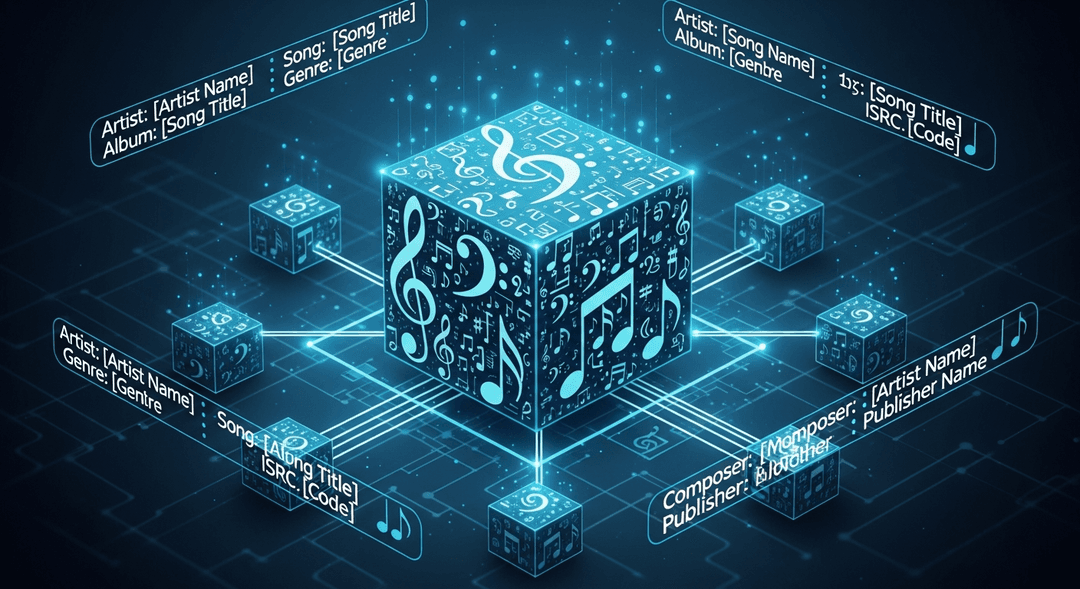
At TunePact, we understand that metadata management can feel daunting for independent musicians. That's why we've built tools and resources specifically designed to simplify this crucial process, helping you maximize your music's reach and revenue.
Leveraging AI to Streamline Metadata Creation
Imagine having an intelligent assistant that helps you craft perfect metadata every time. TunePact's platform integrates advanced AI to do just that.
- Automated Suggestions: Our AI can analyze your music and suggest appropriate genres, moods, and even potential keywords, saving you time and ensuring optimal tagging.
- Error Detection: Before submission, our system automatically scans for common metadata mistakes like typos, formatting inconsistencies, and missing essential information, flagging them for your review. This significantly reduces the chances of rejections or payment issues.
- Standardization: The AI helps enforce industry best practices for formatting artist names, song titles, and other critical data points, ensuring your submissions meet global standards.
This intelligent assistance allows you to focus more on your music and less on the minutiae of data entry, while still guaranteeing accuracy.
Centralized Metadata Management for Easy Distribution
Juggling metadata across multiple spreadsheets or platforms is a recipe for errors. TunePact offers a unified hub for all your music information.
- Single Source of Truth: Enter your metadata once into our intuitive dashboard, and it becomes the definitive record for all your releases.
- Seamless Distribution: When you're ready to release new music, our platform automatically pulls the accurate metadata and prepares it for distribution to all major streaming services and digital stores, ensuring consistency across the board.
- Version Control: Easily update or correct metadata for existing releases from a single interface, and our system will work to push those changes out to all relevant platforms.
This centralized approach drastically reduces the risk of conflicting metadata and streamlines your entire release workflow.
Ensuring Accuracy and Consistency with TunePact
Our commitment goes beyond just tools. TunePact's platform is designed with accuracy and consistency at its core, providing you with peace of mind.
- Guided Workflows: Our submission process guides you step-by-step through entering all necessary metadata, ensuring nothing critical is overlooked.
- Educational Resources: We provide ongoing educational content and support to help you understand metadata best practices and industry standards.
- Dedicated Support: Our team is here to assist you with any metadata-related queries, helping you resolve issues quickly and efficiently.
By using TunePact's music marketing platform, you gain access to powerful tools that not only help you promote your music but also ensure the foundational data is perfectly aligned for success.
Maximizing Your Music's Discoverability with Strategic Metadata
Accurate metadata isn't just about getting paid; it's also about getting found. Strategic use of metadata can significantly boost your music's visibility on crowded streaming platforms and online stores.
Genre Tagging: Reaching the Right Audience
Choosing the right genre tags is crucial for discoverability. It helps algorithms place your music in relevant playlists and recommendations.
- Be Specific: Instead of just "Rock," consider "Alternative Rock," "Indie Rock," or "Hard Rock." The more specific, the better your chances of reaching listeners who genuinely enjoy that niche.
- Think Broadly (but Accurately): Sometimes, a secondary genre can help capture a wider audience without misrepresenting your sound.
- Research Similar Artists: Look at how artists similar to you are categorized. This can provide valuable insights into effective genre tagging.
Proper genre selection ensures your music appears in the right categories, making it easier for new fans to stumble upon your tracks.
Keywords and Descriptive Language: Making Your Music Searchable
Beyond genre, using descriptive keywords helps your music appear in search results and contributes to recommendation algorithms.
- Mood and Emotion: Think about the feeling your song evokes (e.g., "upbeat," "melancholy," "energetic," "relaxing").
- Instrumentation: List prominent instruments (e.g., "piano-driven," "synth-heavy," "acoustic guitar").
- Vocal Style: Describe the vocal performance (e.g., "soulful," "raspy," "ethereal").
- Themes and Lyrical Content: If your song addresses specific themes, use those as keywords (e.g., "love song," "social commentary," "breakup anthem").
These descriptive tags give listeners and algorithms more context, improving your music's chances of being discovered by relevant audiences.
Release Strategies: Planning for Metadata Success
Metadata isn't an afterthought; it should be an integral part of your release strategy. Planning your metadata alongside your marketing efforts ensures a smooth launch and optimal discoverability.
- Pre-Populate Early: Don't wait until the last minute. Enter all your metadata as early as possible in your release schedule.
- Cross-Promote with Keywords: Use the same keywords and descriptive language in your metadata as you do in your social media posts, press releases, and marketing materials.
- Align with Marketing Goals: If you're targeting a specific demographic or mood, ensure your metadata reflects that intent.
A well-thought-out metadata strategy can amplify your efforts to promote your next album release or single, ensuring every piece of information works together to get your music heard.
Staying Updated on Music Metadata Best Practices
The digital music landscape is constantly evolving, and so are metadata standards. Staying informed is key to long-term success as an independent musician.
Industry Resources and Guidelines
Many organizations work to standardize metadata across the industry. Regularly checking their guidelines can help you stay ahead of the curve.
- Music Business Association (Music Biz): Often publishes best practices for metadata submission.
- Digital Service Providers (DSPs): Platforms like Spotify, Apple Music, and Amazon Music often have their own specific metadata guidelines for optimal display and functionality.
- Performing Rights Organizations (PROs): Your PRO will have specific requirements for registering your works and ensuring accurate ownership information.
Making it a habit to review these resources periodically will ensure your metadata remains compliant and effective.
TunePact's Commitment to Metadata Education
TunePact is dedicated to empowering independent artists with the knowledge they need to succeed. We continuously monitor industry changes and update our platform and resources accordingly.
- Regular Blog Posts: Our blog features articles and guides on the latest metadata best practices, industry news, and actionable tips for musicians.
- Platform Updates: We integrate new metadata standards directly into our platform, making it easier for you to comply without extensive manual research.
- Webinars and Tutorials: We offer educational content to walk you through complex topics, including detailed guides on metadata management.
We encourage you to explore TunePact's blog and other educational content to keep your metadata strategy sharp and your music moving forward.
Frequently Asked Questions About Music Metadata
What exactly is music metadata and why is it important?
Music metadata is all the textual and technical information associated with a music recording. This includes descriptive data (like artist name, song title, genre, release date), ownership data (songwriters, publishers, ISRC codes), and recommendation data (moods, instruments). It's important because it ensures your music is correctly identified, tracked, and attributed across all digital platforms. Without accurate metadata, you risk not receiving royalties, losing credit for your work, and your music becoming undiscoverable to new listeners.
How do I obtain an ISRC code for my song?
You typically obtain an ISRC code for your song through your music distributor. When you submit your music for distribution, your distributor (like TunePact) will assign a unique ISRC code to each track. It's crucial that each unique recording (including different mixes or versions) has its own ISRC. If you're not using a distributor, you might be able to apply directly to an ISRC agency in your country, but using a distributor is generally the most common and straightforward method for independent artists.
What are the most common metadata mistakes that musicians make?
The most common metadata mistakes include typos and misspellings in artist names, song titles, or contributor credits, inconsistent capitalization and formatting across different platforms, incomplete or missing information (especially ISRC codes and songwriter details), and conflicting metadata where different platforms display varying information for the same track. These errors can lead to lost royalties, misattribution, and decreased discoverability.
How can TunePact help me manage my music metadata more effectively?
TunePact offers a comprehensive platform designed to streamline music metadata management for independent musicians. Our tools include AI-powered features that suggest genres and keywords, detect common errors, and enforce industry-standard formatting. We provide a centralized system for entering and managing all your metadata, ensuring consistency across all distribution channels. This simplifies the submission process, reduces errors, and helps ensure your music is accurately represented, properly credited, and optimally discoverable on all platforms.