What is a Music Split Sheet? A Guide for Songwriters
In the dynamic world of independent music, collaboration is key to creating groundbreaking tracks. However, while the creative process is exhilarating, the business side of music demands careful attention. One crucial document that often gets overlooked, yet is vital for protecting your work and your income, is the music split sheet. At TunePact, we empower independent artists with the tools and knowledge to navigate the complexities of the music industry. Understanding and utilizing a split sheet is fundamental to a sustainable and dispute-free career.
Understanding Music Split Sheets: The Foundation of Collaboration
Imagine pouring your heart and soul into a new song with fellow musicians. The melodies flow, the lyrics resonate, and the beat drops perfectly. But what happens when that song becomes a hit? Without a clear understanding of who owns what, success can quickly turn into a legal nightmare. This is where a robust music split sheet becomes your best friend.
What Exactly is a Music Split Sheet?
A music split sheet is a written agreement among all collaborators on a song that clearly outlines the ownership percentages of the musical composition. It's a foundational document that prevents future disputes by establishing, in black and white, each contributor's share of the copyright. Think of it as a blueprint for how the financial pie will be divided.
This critical agreement details who contributed what, and how those contributions translate into a percentage of the song's ownership. It’s not just about the final recording, but the underlying composition—the lyrics, melody, and underlying musical structure.
Why Are Split Sheets So Important for Songwriters?
For independent musicians and songwriters, a music split sheet is more than just paperwork; it’s an essential tool for safeguarding your intellectual property. It clarifies copyright ownership from the outset, significantly reducing the risk of disputes over royalties and publishing rights down the line.
Without a written agreement, copyright law often defaults to assuming equal shares among collaborators, regardless of their actual contribution. This default can severely disadvantage a primary songwriter, lyricist, or producer who contributed the bulk of the creative work. A split sheet ensures your contribution is recognized and fairly compensated.
The importance of having a signed songwriting agreement cannot be overstated. It should be in place before a song is released or generates any income. Waiting until a song gains traction can lead to complex and costly legal battles, potentially freezing all royalty payments until a resolution is reached.
The Core Elements of a Solid Songwriting Agreement
A comprehensive music split sheet doesn't need to be overly complicated, but it must contain several key pieces of information to be effective. These elements ensure clarity and legal enforceability:
- Song Title: The official title of the composition.
- Date of Agreement: When the split sheet was formally agreed upon and signed.
- Writer Names and Contact Information: Full legal names, addresses, and contact details for every contributor.
- Ownership Percentages: This is the most crucial part. It clearly states each writer's share of the composition, typically divided into a Writer's Share and a Publisher's Share.
- Performing Rights Organization (PRO) Affiliation: Each writer's affiliation with a PRO like ASCAP, BMI, or SESAC.
- Signatures and Dates: Legal signatures from all parties involved, indicating their consent to the terms.
By including these essential components, your music collaboration contract becomes a robust legal document, protecting all parties involved and ensuring that everyone understands their stake in the song's future success.
Navigating Publishing Splits and Royalty Agreements in Music
Once you understand the fundamental purpose of a music split sheet, the next step is to grasp how it directly impacts your earning potential. This involves delving into the world of music publishing rights and the various royalty streams your music can generate.
Demystifying Publishing Rights and Royalty Streams
Music publishing rights are essentially the rights associated with the musical composition itself (the melody, lyrics, and underlying structure), as opposed to the sound recording. These rights are incredibly valuable because they generate various types of royalties:
- Performance Royalties: Paid whenever your song is performed publicly (e.g., on radio, TV, in venues, streaming services). Collected by PROs.
- Mechanical Royalties: Paid whenever your song is reproduced (e.g., sold on CDs/vinyl, downloaded, streamed interactively). Collected by mechanical licensing agencies.
- Synchronization Royalties: Paid when your song is used in visual media (e.g., films, TV shows, commercials, video games). Negotiated directly with publishers.
- Print Royalties: Paid when your sheet music is reproduced.
Each of these royalty streams is tied back to the ownership percentages established in your music split sheet. For a deeper dive into the intricacies of these agreements, check out our guide on understanding music publishing contracts.
How Split Sheets Impact Your Royalty Payments
Your music split sheet is the foundational document that dictates how all these publishing royalties are distributed among co-writers and their respective publishers. Without an agreed-upon split, PROs and other collection societies will not know how to accurately disburse payments, leading to significant delays or even frozen funds.
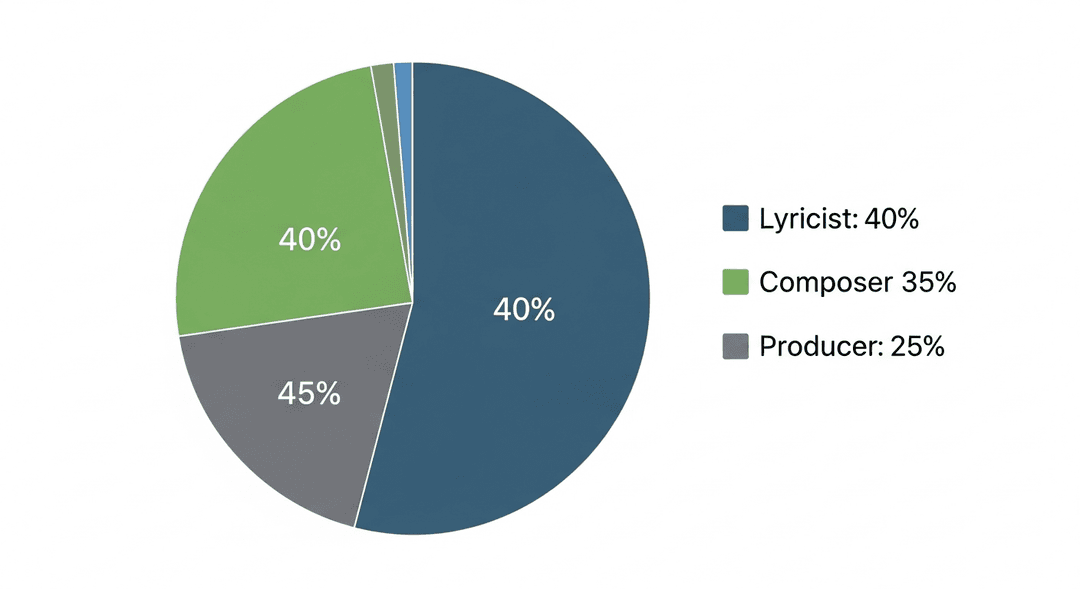
For example, if a song has two writers, John and Jane, and the split sheet assigns John 60% and Jane 40% of the composition, then all performance, mechanical, and synchronization royalties generated by that composition will be divided according to those percentages. This clarity is crucial for ensuring everyone gets paid fairly and on time.
Common Scenarios: Fair Division of Publishing Splits
Determining fair publishing splits can sometimes be a delicate negotiation, as contributions aren't always equal. Here are some common scenarios and considerations for dividing ownership:
- Lyrics and Melody: Often, the lyricist and melodist will split the composition 50/50 if their contributions are deemed equally significant.
- Beat Production: A producer who creates a unique beat that forms the core of the song's musical identity often receives a significant percentage, sometimes 25-50% of the composition.
- Arrangement and Structure: If a collaborator significantly contributes to the song's structure or arrangement, this should also be accounted for in the splits.
- Topline Contribution: A "topliner" who writes the melody and lyrics over an existing beat might receive a substantial share, often sharing equally with the beatmaker.
Remember, the goal is always a fair and mutually agreed-upon division that accurately reflects each person's creative input. Performing Rights Organizations (PROs) like BMI and ASCAP rely heavily on the information provided in your split sheet to collect and distribute these royalties. Accurate registration with your PRO is paramount, as discrepancies between your split sheet and PRO registration can lead to royalty payment freezes and administrative headaches.
Creating and Using a Music Collaboration Contract Effectively
Now that you understand the "why," let's dive into the "how." Creating a functional music collaboration contract doesn't have to be intimidating. With the right approach and tools, you can easily protect your interests and maintain healthy creative partnerships.
Step-by-Step Guide to Drafting a Music Split Sheet
Here’s a practical guide to help you create your own music split sheet:
- Identify All Collaborators: List every individual who contributed creatively to the song's composition (lyrics, melody, core beat, significant arrangement).
- Discuss Contributions Openly: Have an honest conversation about each person's creative input. This helps determine fair percentages.
- Determine Ownership Percentages: Based on the discussion, assign a percentage of the composition to each collaborator. Remember, the total must add up to 100%. This typically involves dividing the composition into a Writer's Share (50%) and a Publisher's Share (50%), and then splitting each of those percentages among the contributors.
- Gather Essential Information: Collect full legal names, addresses, email, phone numbers, and PRO affiliations for all parties.
- Draft the Document: Use a clear and concise template (see next section) to fill in all the agreed-upon details.
- Review and Sign: Ensure everyone reviews the document thoroughly. Once everyone agrees, all parties must sign and date the split sheet. Keep a copy for your records.
Open communication throughout this process is crucial. It builds trust and ensures everyone feels valued and understood.
Using Split Sheet Templates and Digital Tools
You don't need to start from scratch to create a professional music split sheet. Numerous resources offer free or affordable templates online. These templates provide a solid framework, ensuring you don't miss any critical details. Simply search for "free music split sheet template" to find many options.
Beyond static templates, digital tools and apps are revolutionizing how independent musicians manage their agreements. Platforms like TunePact offer features that can help you manage and track these agreements, making the process seamless. Our tools simplify the organization of your music business, providing a central hub for important documents like split sheets.
Best Practices for Collaboration and Agreement
Effective collaboration goes hand-in-hand with clear agreements. To ensure a smooth process and avoid future disputes:
- Discuss Splits Early: Address the division of ownership at the very beginning of a collaboration, or at least before the song is fully developed.
- Document Everything: Beyond the split sheet, keep records of discussions, creative contributions, and any changes made during the songwriting process.
- Communicate Clearly: Maintain open and honest communication with all collaborators. Don't let assumptions or unspoken expectations fester. For more guidance, explore our music collaboration tips.
- Seek Legal Counsel: While templates are helpful, for complex collaborations or significant projects, it's always wise to have a legal professional review your music collaboration contract. This ensures it's legally sound and enforceable in your jurisdiction.
By integrating these best practices, your creative endeavors can flourish without the looming threat of legal or financial disagreements.
Protecting Your Music: Avoiding Songwriting Agreement Disputes
Even with the best intentions, conflicts can arise in any collaboration. Understanding common pitfalls and having a plan for dispute resolution is crucial for any independent musician. A well-crafted songwriting agreement acts as your first line of defense.
Common Pitfalls in Music Collaboration Contracts
Many disputes stem from a few recurring issues that a proper music split sheet is designed to prevent:
- Lack of Clear Agreements: The most common pitfall. Without a written agreement, memories fade, and interpretations differ.
- Disagreements Over Contribution: One collaborator might feel they contributed more than initially acknowledged, leading to a desire to renegotiate splits after the fact.
- Changes in Creative Direction: As a song evolves, initial contributions might seem less significant, or new contributors might be added without updating the agreement.
- Unforeseen Success: When a song gains unexpected popularity, the financial stakes rise, and past informal agreements can suddenly feel unfair to one party.
These scenarios highlight why a formal, signed royalty agreement music document is indispensable from day one.
Resolving Disputes and Amending Split Sheets
Should a dispute arise, the first step is always open and honest communication. Try to resolve issues amicably through direct negotiation. If direct talks falter, consider mediation, where a neutral third party helps facilitate a resolution. This is often less costly and time-consuming than legal action.
A music split sheet isn't necessarily set in stone forever. If a song evolves, new collaborators join, or roles change significantly, the split sheet can be amended. This requires all original signatories to agree to the changes and sign a new, updated agreement or an addendum to the original. Always ensure new agreements are fully documented and signed by all relevant parties.
The Role of Legal Counsel in Protecting Your Rights
While DIY templates are a good starting point, for significant projects or when disagreements emerge, seeking legal counsel is highly recommended. An experienced entertainment lawyer can:
- Review your music collaboration contract for legal soundness.
- Advise on fair percentages based on industry standards and contributions.
- Help negotiate terms with collaborators.
- Assist in resolving disputes and, if necessary, represent your interests in court.
Investing in legal advice upfront can save you considerable time, money, and emotional stress in the long run. Real-life examples of music royalty disputes abound, with many high-profile cases demonstrating how a simple, clear split sheet signed early could have prevented years of litigation and millions in legal fees.
TunePact Tools for Managing Your Music Business
At TunePact, we understand the challenges independent musicians face in balancing creativity with the business demands of their career. That's why we've developed a suite of tools designed to simplify the administrative burden and help you focus on what you do best: making music.
How TunePact Can Help You Track Your Royalties
Managing and tracking royalties can be complex, especially with multiple songs and collaborators. TunePact offers intuitive features to help you keep tabs on your earnings. Our platform allows you to upload and manage your music split sheets, connecting them to your song registrations.
By centralizing your agreements and song data, TunePact helps you monitor your song's performance across various platforms. This means you can more easily reconcile payments from PROs and distributors, ensuring you receive every penny you're owed according to your royalty agreement music.
Using TunePact to Organize Your Music Metadata
Accurate and comprehensive metadata is the backbone of successful music distribution and royalty collection. TunePact provides robust tools for organizing all your music metadata, from song titles and ISRCs to songwriter credits and PRO affiliations. This ensures that your songs are properly identified wherever they are played.
Properly managed metadata, linked to your split sheets, ensures that when your music is consumed globally, the correct information is sent to collection societies, drastically reducing the chances of misallocated or lost royalties. Stay organized and protect your income with TunePact.
Leveraging AI to Market Your Music
Beyond agreements and royalties, TunePact is committed to helping you grow your audience. Our advanced AI music marketing platform leverages cutting-edge technology to help independent musicians promote their tracks effectively. From identifying target audiences to optimizing ad campaigns, our AI tools are designed to maximize your reach and engagement.
By integrating tools for agreement management, royalty tracking, metadata organization, and powerful AI marketing, TunePact offers a holistic solution for independent artists. We empower you to take control of your music business, protect your assets, and grow your career on your own terms.
Frequently Asked Questions About Music Split Sheets
Navigating the world of music agreements can bring up a lot of questions. Here are answers to some of the most common queries we hear about music split sheets.
When should I create a music split sheet?
You should create a music split sheet as early as possible in the collaboration process. Ideally, this conversation should happen in the studio or during the initial creative sessions, and the document should be signed before the song is finalized, recorded, or released. Waiting until a song gains traction can complicate negotiations and lead to disputes.
Who should sign a music split sheet?
Every individual who made a creative contribution to the musical composition of the song should sign the music split sheet. This includes lyricists, melodists, beatmakers, and anyone else who contributed to the core elements of the song. If a contributor is a minor, a parent or legal guardian must sign on their behalf.
What happens if a collaborator refuses to sign a split sheet?
If a collaborator refuses to sign a music split sheet, it creates a significant risk. Without a signed agreement, copyright law often defaults to assuming equal ownership among all contributors. This means if there are three writers, each might be considered to own 33.3% of the composition, regardless of their actual input. This can lead to frozen royalty payments and legal disputes if the song generates income. It's often best to resolve this before moving forward with the song's release.
Can a music split sheet be amended after it's signed?
Yes, a music split sheet can be amended after it's signed, but it requires the explicit agreement of all original signatories. Any changes to ownership percentages or other terms must be documented in a new, updated split sheet or an official addendum. This new document must also be signed and dated by all parties involved to be legally binding.