
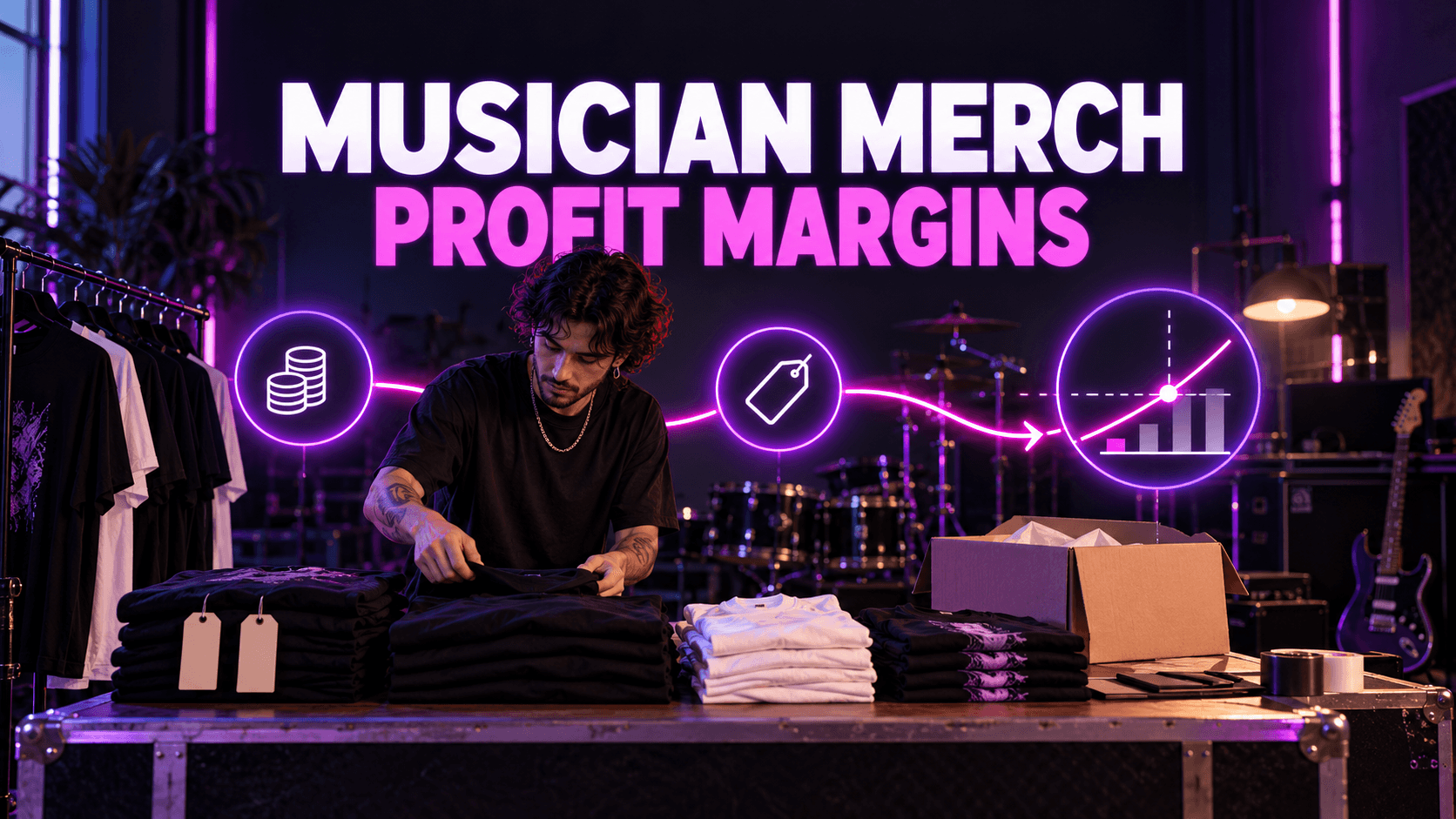
The Musician's Guide to Merch Margins in 2026

Unlock the full potential of your merch table in 2026. This guide explores how to optimize musician merch strategy, innovative band merchandise ideas, and powerful online tools to turn listeners into loyal supporters.

TunePact Editorial
16 min read
The Musician's Guide to Merch Margins in 2026 - TunePact Blog

The Musician's Guide to Merch Margins in 2026

In the dynamic world of independent music, simply releasing great tracks is no longer enough to build a sustainable career. For artists navigating 2026, merchandise has evolved from a simple concert souvenir into a critical pillar of financial stability and fan engagement. This isn't just about selling t-shirts; it's about crafting a comprehensive musician merch strategy that fuels your creative journey and deepens your connection with your audience.

At TunePact, we understand the challenges and opportunities facing independent artists. This guide will walk you through optimizing your merch profit margins, exploring innovative design ideas, and leveraging powerful online tools to turn your listeners into loyal supporters and investors in your art. Let's unlock the full potential of your merch table, both online and off.

Why Merch Matters: The Modern Musician's Revenue Stream

For today's independent artist, merchandise is far more than a supplementary income source. It has become a fundamental element of a robust and sustainable music career. As the digital landscape shifts and streaming royalties remain modest, physical and digital goods provide a tangible connection to fans and a crucial revenue stream.

Beyond the Music: Building a Brand with Merchandise

Your music tells a story, but your merchandise helps your fans wear that story proudly. Merch allows you to extend your artistic vision beyond audio, creating a physical representation of your brand, aesthetic, and message. When fans purchase your merch, they're not just buying an item; they're investing in your identity and becoming ambassadors for your brand.

This visible support transforms passive listeners into active participants in your journey, fostering a deeper sense of community. By strategically designing items that resonate with your sound and image, you can cultivate a distinctive brand presence that stands out in a crowded market. Think of merch as wearable art that amplifies your musical narrative.

Merch as an Investment: Funding Your Music Career

The revenue generated from merchandise sales is often the lifeblood for independent musicians. It directly funds crucial aspects of your career, from recording new tracks and producing music videos to covering tour expenses and investing in marketing. Unlike fluctuating streaming income, merch offers a more direct and often higher-margin return, empowering you to reinvest in your craft.

The conversation around music monetization has significantly evolved. Many experts now believe that Physical Music as a Core Revenue Channel will become even more pronounced by 2026. This highlights the growing importance of tangible goods in an artist's financial strategy. By diversifying your income streams with a strong musician merch strategy, you build resilience and create a more predictable financial foundation for your artistic endeavors.

TunePact Integration: Connecting Merch to Your Fanbase

At TunePact, we empower artists to seamlessly integrate their merchandise sales into their broader fan engagement and management strategy. Our platform helps you understand your audience's preferences, track sales, and connect directly with fans who are eager to support you. By analyzing fan data, you can tailor your merch offerings to what your specific community truly desires, maximizing both sales and impact.

Understanding your audience is paramount. What styles do they prefer? What messages resonate with them? TunePact's tools can help you answer these questions, ensuring your merch isn't just generic band swag, but something truly special and sought after. Learn more about how to diversify your income and connect with fans through our comprehensive music monetization strategies for independent artists, designed for the future of music.

Decoding Merch Profit Margins: What Sells in 2026?

To truly build a profitable musician merch strategy, you need to understand the economics of what you're selling. Knowing your costs, setting smart prices, and identifying high-demand, high-margin items are crucial for maximizing your revenue. The landscape of what fans buy is always changing, so staying informed about current trends is key.

Hypebot's Merch Profitability Index: Key Takeaways

Keeping an eye on industry insights is vital for any independent artist. The Musician's Guide to Merch Margins 2026, as detailed by Hypebot, provides invaluable data on which merchandise items are performing best in terms of sales volume and profitability. This index often highlights the wholesale costs and potential retail profit margins for various items, offering a clear roadmap for artists.

For example, while t-shirts remain a staple, their profit margins might be moderate due to high competition. Items like limited edition vinyl or unique accessories, despite lower volume, often boast significantly higher per-unit margins. Analyzing these trends helps you make informed decisions about your product catalog and ensures you're investing wisely in your merch production.

High-Volume Staples vs. High-Margin Add-ons

A successful merch profit margins strategy often involves a balanced approach. High-volume staples are your bread-and-butter items—things like t-shirts, stickers, and buttons. These are generally lower in cost to produce, appeal to a broad audience, and can generate consistent sales. While their individual profit margins might be modest, their sheer volume makes them essential for overall revenue.

On the other hand, high-margin add-ons are typically more specialized or premium items. This could include limited edition vinyl, custom hoodies, art prints, or unique collectibles. These items might sell in smaller quantities, but their higher price point and perceived value lead to substantial profit margins per sale. Combining both types allows you to cater to different fan budgets and maximize your earnings. Remember to factor in your operational costs; TunePact's TunePact pricing plans are designed to support artists by providing tools that help optimize these efforts.

The world of merchandise is constantly evolving. In 2026, we're seeing a significant shift towards sustainable products, personalized items, and even digital merch. Fans are increasingly conscious about environmental impact, making organic cotton apparel or upcycled accessories highly desirable. Personalized items, like custom lyric prints or handwritten notes with purchases, create a unique and intimate connection.

Digital merch, including exclusive downloadable content or even NFTs, are emerging as new frontiers for artists to explore, offering unique opportunities for engagement and monetization. Keep an eye on what other independent musicians are doing successfully. Observe their online stores, social media promotions, and fan interactions to gather inspiration. Staying agile and willing to experiment with new formats will keep your band merchandise ideas fresh and appealing.

DIY Band Merch: Creative & Cost-Effective Ideas

Starting your merch journey doesn't require a huge upfront investment. For independent artists, a DIY band merch approach can be incredibly effective, allowing you to create unique, authentic items that resonate with your fanbase while keeping costs low. This strategy is perfect for testing ideas and building momentum.

Low-Cost Merch Options for Independent Artists

When budget is a primary concern, focus on items with minimal production costs and high perceived value. Stickers are incredibly popular, cheap to produce, and offer excellent visibility as fans place them on laptops, water bottles, and car bumpers. Buttons and pins are similarly affordable and allow fans to customize their apparel or bags.

Consider creating handmade items that reflect your unique artistic flair. This could include hand-printed patches, custom-designed keychains, or even small, personalized art pieces. These items often carry a higher emotional value for fans because of the personal touch. Even simple things like custom-designed guitar picks or branded shoelaces can be low-cost entry points that offer unique appeal.

Unique Merch Ideas to Stand Out From the Crowd

To truly capture your fans' attention, think beyond the conventional. What makes your band unique? How can that be translated into merchandise? Instead of just a generic band logo, consider abstract designs inspired by your album art, inside jokes from your lyrics, or iconic imagery related to your performances. Band Merch Ideas for Creative Designs offers a great starting point for inspiration, including suggestions for enamel pins, posters, and more.

Could you offer a "mystery box" of curated items? Or perhaps limited-run, serialized prints of your album artwork? The goal is to create items that fans will not only buy but actively seek out and collect. By infusing your merchandise with personality and creativity, you foster a deeper connection and give fans something truly special to cherish.

Leveraging Print-on-Demand Services

Print-on-demand (POD) services have revolutionized how independent artists can offer a wide range of merchandise without holding inventory. Platforms like Printful, Printify, and Redbubble allow you to upload your designs, and they handle the printing, fulfillment, and shipping directly to your fans. This eliminates upfront costs and the risk of unsold stock.

POD is ideal for items like t-shirts, hoodies, posters, mugs, phone cases, and even home decor. It allows you to experiment with various designs and product types with zero financial risk. While the per-item profit margin might be slightly lower than bulk ordering, the convenience and financial flexibility make it an indispensable tool for any artist developing their musician merch strategy. For more tips on reaching your audience effectively, explore our band marketing strategies and tips.

Selling Merch Online: Maximize Your Reach

Extending your brand with creative band merchandise ideas

In today's digital age, an online presence is non-negotiable for selling merchandise. An effective selling merch online strategy allows you to reach fans globally, extending your merch table far beyond local venues. Setting up an online store, leveraging social media, and integrating with streaming platforms are crucial steps.

Setting Up Your Online Merch Store

Choosing the right platform for your online merch store is a critical decision. Options like Shopify offer extensive customization and robust e-commerce features, ideal for artists looking to build a professional, scalable store. For a simpler, music-focused solution, Bandcamp is excellent, allowing you to sell music and merch side-by-side with minimal setup.

Platforms like Big Cartel are also popular among independent artists for their affordability and user-friendly interface. Whichever platform you choose, ensure it integrates seamlessly with payment processors, allows for easy product management, and provides a smooth shopping experience for your fans. High-quality product photos and detailed descriptions are essential for showcasing your items effectively.

Leveraging Social Media for Merch Promotion

Social media is your most powerful tool for promoting merchandise. Don't just post product shots; create engaging content that tells a story around your merch. Show behind-the-scenes glimpses of designs, feature fans wearing your gear, run polls asking for design preferences, and host giveaways. Platforms like Instagram, TikTok, and Facebook offer diverse ways to showcase your products.

Consider running targeted ads on these platforms, directing traffic to your merch store. Use compelling visuals, short video clips, and clear calls to action. Live streams and Q&A sessions where you showcase new merch can also drive significant interest and sales. Remember, authentic engagement is key to converting followers into customers, making it a vital part of your musician merch strategy.

Integrating Merch with Streaming Platforms

The ability to sell merch directly where fans consume your music is a game-changer. Platforms like Spotify and Apple Music now offer integrations that allow artists to display and sell merchandise directly from their artist profiles. For instance, familiarize yourself with the Spotify Merch Guidelines to ensure your listings comply with their rules and maximize visibility.

These integrations create a seamless fan experience, allowing listeners to discover and purchase your merch without ever leaving the platform where they're enjoying your tracks. This direct connection dramatically increases the chances of impulse purchases and deepens fan loyalty. As music consumption continues to evolve, incorporating these integrations will be a key part of Future music marketing strategies for musicians.

Band Merchandise Ideas: Beyond the T-Shirt

While the classic band t-shirt remains a staple, the landscape of band merchandise ideas has expanded dramatically. To truly stand out and cater to diverse fan preferences, independent artists should explore a wide array of options, from physical collectibles to innovative digital offerings. Diversifying your merch catalog can unlock new revenue streams and deepen fan engagement.

Limited Edition Vinyl and Physical Media

The resurgence of vinyl records is more than just a nostalgic trend; it's a testament to fans' desire for tangible, high-quality physical media. Limited edition vinyl, often pressed in unique colors, with exclusive artwork, or signed by the band, can become highly coveted collector's items. These items command higher price points and offer significant merch profit margins.

Beyond vinyl, consider other physical media like beautifully packaged CDs with elaborate liner notes, cassette tapes for a retro vibe, or even custom USB drives containing exclusive content. These items serve as both premium merchandise and a physical embodiment of your art, offering fans a deeper, more tactile connection to your music. This also aligns with the growing trend of Physical Music as a Core Revenue Channel, making physical media a powerful tool in your overall strategy.

Accessories and Collectibles

Thinking beyond apparel opens up a world of creative possibilities. Consider accessories like custom hats, beanies, or scarves that feature your band's logo or unique designs. Enamel pins and patches are incredibly popular, allowing fans to personalize their own clothing and accessories. Keychains, phone cases, and even custom guitar straps can also be highly desirable.

For collectibles, think about items like art prints of your album covers, lyric sheets, or even small, branded figurines. The goal is to offer items that fans can integrate into their daily lives or display proudly as a testament to their fandom. For more inspiration on unique items, check out Band Merch Ideas for Creative Designs, which highlights creative and effective options.

Digital Merch and NFTs

As the digital frontier expands, so do opportunities for merchandise. Digital merch can include exclusive downloadable content, such as unreleased demos, instrumental tracks, digital art packs, or even custom phone wallpapers and social media filters. These items have zero production cost and can offer excellent profit margins.

NFTs (Non-Fungible Tokens) are also emerging as a powerful new revenue stream for musicians. Offering unique digital collectibles, such as limited-edition album art, behind-the-scenes footage, or even tokenized ownership of song snippets, can engage a tech-savvy audience and create a new tier of fandom. Understanding these options is key to developing robust music monetization strategies for independent artists in 2026 and beyond.

Frequently Asked Questions About Musician Merch Strategy

Navigating the world of merchandise can bring up a lot of questions for independent artists. Here, we address some of the most common inquiries to help you refine your musician merch strategy and ensure your efforts are both profitable and sustainable.

What is a good profit margin for band merch?

A "good" profit margin for band merch can vary widely depending on the item, production method, and your target audience. Generally, aiming for a 50-70% profit margin on apparel like t-shirts is considered healthy, meaning if a t-shirt costs you $10 to produce, you'd ideally sell it for $20-$33. For lower-cost items like stickers or buttons, the profit margin can be even higher (e.g., 200-500%) due to their minimal production cost.

For high-value, limited-edition items like vinyl or custom art, you might aim for a 30-50% margin, as the higher price point already delivers significant gross profit. Always calculate your wholesale cost (including shipping/fees) and then determine a retail price that covers your costs, offers a fair profit, and is appealing to your fans. Don't forget to factor in transaction fees and shipping costs when selling online.

What are some creative merch ideas for musicians?

Beyond the standard t-shirt, creative merch ideas can include:

  • Custom Enamel Pins: Featuring album art, mascots, or inside jokes.
  • Branded Coffee Mugs or Tumblers: Practical items with daily visibility.
  • Lyric Books or Zines: Highlighting your songwriting process or inspirations.
  • Hand-Printed Tote Bags: Eco-friendly and useful for fans.
  • Signature Guitar Picks or Drumsticks: Especially appealing to fellow musicians.
  • "Mystery Box" Bundles: Curated selections of items, often with a rare piece.
  • Personalized Items: Hand-signed postcards, custom doodles with orders.
  • Digital Collectibles: Exclusive wallpaper packs, social media filters, or NFTs.
  • Recipe Cards: If your band has a quirky connection to food or drinks.
  • Seed Packets: Eco-friendly and reflective of certain band aesthetics.
The key is to think about what unique aspects of your brand or music can be translated into a tangible (or digital) item that fans will genuinely value and want to own.

How can I promote my band's merch online?

Promoting your band's merch online requires a multi-faceted approach:

  • High-Quality Visuals: Use professional photos and videos of your merch, ideally worn by models or fans.
  • Social Media Campaigns: Post regularly on Instagram, TikTok, Facebook, and X. Use stories, reels, and live streams to showcase items.
  • Fan Features: Encourage fans to share photos wearing your merch and repost them. This builds community and social proof.
  • Website/Link in Bio: Ensure your merch store link is easily accessible from all your online profiles.
  • Email List Marketing: Send out newsletters announcing new drops, sales, or exclusive bundles to your subscribers.
  • Bundles and Discounts: Offer limited-time deals or bundle merch with digital downloads/physical music.
  • Contests and Giveaways: Run engaging contests where merch is a prize.
  • Cross-Promotion: Mention your merch during live streams, interviews, or in your song descriptions on streaming platforms.
  • Targeted Ads: Use paid social media ads to reach specific demographics who might be interested in your music and merch.
Consistency and creativity are crucial for an effective selling merch online strategy.

When selling band merch, several legal considerations are important to keep in mind:

  • Copyright: Ensure all designs, logos, and artwork used on your merchandise are either original creations, you own the copyright, or you have proper licenses to use them. Avoid using copyrighted material (e.g., famous characters, movie quotes, other band logos) without explicit permission.
  • Trademarks: Consider trademarking your band name and unique logo to protect your brand identity. This prevents others from using similar names or designs.
  • Licensing: If you're using lyrics, images, or designs from collaborators or external artists, ensure you have a clear licensing agreement outlining usage rights and royalties.
  • Merch Supplier Agreements: Have clear contracts with your print-on-demand services or bulk suppliers regarding quality, delivery times, and intellectual property.
  • Consumer Protection Laws: Be transparent about product descriptions, materials, sizing, and return policies. Adhere to consumer rights laws in regions where you sell.
  • Sales Tax/VAT: Understand your obligations regarding sales tax or VAT in your operating region and where your customers are located. This can be complex, so consulting with an accountant is advisable.
Addressing these legal aspects upfront will protect you and your brand, allowing you to focus on growing your musician merch strategy with confidence.

0 Comments
Leave a Comment